

Oestrogen and Your Gut: The Link Nobody Explains
Your gut bacteria directly regulate how much oestrogen circulates in your body. A specialised group of gut microbes — called the estrobolome — produces an enzyme that recycles oestrogen back into your bloodstream. When that microbial community is out of balance, your hormone levels can swing too high or too low, driving symptoms like bloating, mood changes, weight gain, and irregular cycles — especially in women over 40.
⭐ Save $54 on the 90-day plan — the time it takes for real gut microbiome change.
What is the estrobolome and why does it matter?
The estrobolome is the collection of gut bacteria capable of metabolising oestrogen. These microbes produce an enzyme called beta-glucuronidase, which deconjugates oestrogen in the gut — essentially unlocking it so it can be reabsorbed into circulation rather than excreted. Think of it as a recycling system. When it works well, your body maintains a healthy oestrogen balance. When it does not, things go wrong in both directions.
Research published in the journal Maturitas describes the estrobolome as a critical regulator of circulating oestrogen, noting that dysbiosis (an imbalanced gut microbiome) can alter the activity of beta-glucuronidase and therefore the amount of oestrogen available to your tissues. Baker et al. (2017) outlined this mechanism and its downstream effects on health outcomes in women.
If beta-glucuronidase activity is too high — which can happen when harmful bacteria dominate — more oestrogen gets reabsorbed. This may contribute to oestrogen-dominant symptoms like bloating, heavy periods, and breast tenderness. If activity is too low, oestrogen gets flushed out too quickly, potentially deepening the hormonal lows already happening in perimenopause.
"The gut microbiome influences systemic oestrogen levels through a community of microbes collectively termed the estrobolome."
— Baker JM et al., Maturitas, 2017
Why does this hit harder after 40?
From your early to mid-40s, oestrogen levels naturally become more erratic as perimenopause begins. At the same time, the diversity of your gut microbiome tends to decline with age — meaning the estrobolome becomes less stable precisely when hormonal balance matters most.
This creates a compounding problem. Fluctuating oestrogen disrupts the gut lining and alters motility (how quickly food moves through your digestive tract). A disrupted gut, in turn, mismanages oestrogen recycling. The two systems feed back on each other — and symptoms like bloating, constipation, brain fog, and unexplained weight changes are often the result.
A 2019 review in Gut Microbes noted that the composition of the gut microbiome shifts significantly during the menopausal transition, and that these shifts correlate with changes in metabolic and hormonal markers. Peters et al. (2019) highlighted the bidirectional relationship between sex hormones and gut microbial diversity.
It is also worth knowing that oestrogen plays a direct role in maintaining the integrity of the gut lining. Lower oestrogen levels have been associated with increased intestinal permeability — sometimes called "leaky gut" — which can amplify inflammation and make digestive symptoms feel worse. This is not a fringe theory; it is a well-observed physiological pattern that researchers are actively studying.
What symptoms suggest your oestrogen-gut axis is off?
There is no single definitive test for estrobolome dysfunction, but a cluster of symptoms often points in this direction — particularly when they arrive or worsen in your 40s alongside hormonal changes.
| Symptom | Possible connection |
|---|---|
| Persistent bloating | Altered gut motility linked to oestrogen fluctuation |
| Irregular or heavier periods | Excess oestrogen reabsorption via overactive beta-glucuronidase |
| Constipation or loose stools | Oestrogen receptors in the gut affecting motility speed |
| Mood swings and brain fog | Gut-brain axis disruption partly driven by microbiome imbalance |
| Unexplained weight gain (especially around the middle) | Metabolic shifts tied to both oestrogen decline and gut dysbiosis |
| Skin changes or breakouts | Inflammatory signals from the gut reaching peripheral tissues |
If several of these sound familiar, it does not mean something is seriously wrong — but it does suggest your gut and hormonal health may be worth paying closer attention to.
Thousands of people have already made the switch. ★★★★★ 4.8 from 1,019 reviews.
The 90-Day Gut Reset Plan — $66 (normally $120)
Start My 90-Day Reset →What actually helps? Lifestyle habits that support the oestrogen-gut axis
The good news is that the estrobolome responds to the same habits that support gut health generally. You do not need a complex protocol. You need consistency with a handful of well-evidenced practices.
1. Eat more fibre — aiming for around 30g a day
Dietary fibre feeds beneficial gut bacteria and helps bind excess oestrogen in the gut so it can be excreted rather than reabsorbed. Most women in the UK eat around 17-18g of fibre per day — roughly half the recommended amount. Closing that gap with vegetables, legumes, wholegrains, and seeds is one of the most practical things you can do for both gut health and hormonal balance.
Cruciferous vegetables like broccoli, Brussels sprouts, and cauliflower contain a compound called indole-3-carbinol, which research suggests supports healthy oestrogen metabolism. They are worth making a regular part of your plate.
2. Prioritise sleep (even when perimenopause makes it hard)
Poor sleep disrupts gut microbial diversity, raises cortisol, and amplifies hormonal volatility. A consistent sleep schedule — aiming for 7 to 9 hours — supports the gut-hormone axis in ways that no supplement fully compensates for. This is easier said than done during perimenopause, but even improving sleep hygiene at the margins makes a measurable difference.
3. Move your body regularly
Regular moderate exercise — walking, cycling, yoga, swimming — has been shown to increase microbial diversity and support healthy oestrogen metabolism. You do not need a punishing gym schedule. Studies suggest even 150 minutes of moderate activity per week is associated with a more diverse gut microbiome compared to sedentary behaviour.
4. Include live cultures in your diet
Fermented foods and live-culture supplements introduce beneficial bacteria that can help restore balance to a disrupted microbiome. Foods like natural yoghurt, kefir, sauerkraut, and kimchi are well-established sources. If fermented foods are not a regular part of your diet — which is true for most people — a well-formulated probiotic supplement can help fill the gap.
If you want to understand how probiotics work before you start, our Complete Beginner's Guide to Probiotics covers the basics in plain English.
5. Manage stress consistently
Chronic stress raises cortisol, which disrupts the gut lining and alters microbial balance. Mind-body practices like breathwork, journalling, or even a short daily walk outside have real, measurable effects on the gut-brain axis. This is not soft advice — it is supported by a robust body of research on the HPA axis and its relationship to gut health.
How does a postbiotic fit into all of this?
You have probably heard of probiotics (live bacteria) and prebiotics (the fibre that feeds them). Postbiotics are the beneficial compounds that gut bacteria produce — things like short-chain fatty acids, enzymes, and metabolites that directly support the gut lining and immune function.
A complete approach to gut health ideally addresses all three: feeding your existing bacteria (prebiotics), introducing beneficial strains (probiotics), and supporting the metabolic output those bacteria create (postbiotics). Most products focus on just one. Formulas that combine all three are sometimes called synbiotics — and the evidence for combined approaches is growing.
If you are curious about whether gummy-format supplements deliver real results, we have covered that question honestly in our article on Do Kombucha Gummies Actually Work?
Is a daily gut supplement actually worth it?
This is a fair question — and worth answering honestly. Supplements are not magic, and no gummy replaces a fibre-rich diet, regular movement, and good sleep. But for many women, the gap between what they know they should eat and what they actually eat consistently is significant. A daily supplement designed to support gut health can help bridge that gap without overhauling your routine.
The key is looking for something that is low in sugar, contains clinically relevant strains, and combines pre, pro, and postbiotics in one format you will actually use every day. Consistency matters far more than the occasional perfect gut-health day.
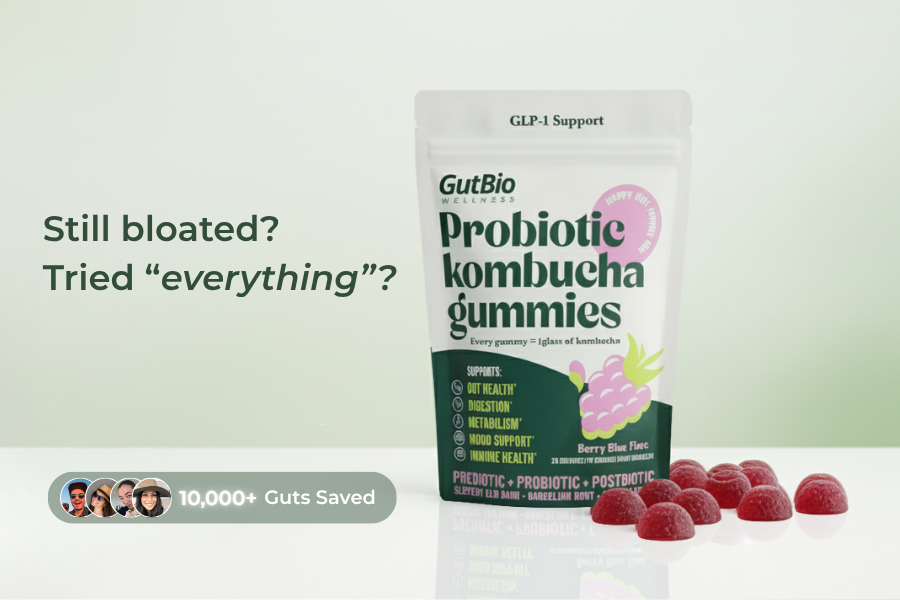
GutBio Kombucha Gummies are designed to support exactly this — a daily gut-health habit that works with your lifestyle, not against it. The formula combines prebiotics, probiotics, and postbiotics in a low-sugar gummy, making it genuinely easy to stay consistent. With a 4.8-star rating from over 1,019 verified reviews and a 60-day money-back guarantee, it is a low-risk way to see whether daily gut support makes a difference for you.
You can also read more on a related topic — whether probiotics can support weight management — which is a question many women in their 40s are asking alongside the hormonal changes discussed here.
The bottom line on oestrogen and gut health
The connection between oestrogen and gut health is real, well-researched, and still significantly under-discussed in mainstream conversations about women's health. The estrobolome — your gut's oestrogen-regulating ecosystem — is something every woman over 40 deserves to know about. Understanding it reframes a lot of symptoms that are often dismissed as "just hormones" or "just getting older."
The practical actions that support it are not complicated: eat more fibre, sleep well, move regularly, manage stress, and include live cultures in your diet. GutBio Kombucha Gummies are designed to support the live-culture piece of that equation as an easy, consistent daily habit — not as a replacement for the other habits, but as a reliable part of a broader approach.
If you want to try GutBio risk-free, there is a 60-day money-back guarantee — so you have two full months to decide whether it makes a real difference to how you feel.
Frequently Asked Questions
What is the estrobolome and how does it affect oestrogen levels?
The estrobolome is the collection of gut bacteria that regulate oestrogen metabolism. These microbes produce an enzyme called beta-glucuronidase, which recycles oestrogen back into circulation. When the estrobolome is out of balance — due to poor diet, stress, antibiotics, or age — oestrogen levels can shift too high or too low, contributing to a range of hormonal symptoms.
Can improving gut health really reduce perimenopause symptoms?
Supporting gut health can help stabilise oestrogen metabolism, which may ease some perimenopause symptoms — particularly bloating, irregular cycles, mood changes, and weight shifts that have a hormonal-gut component. It is not a replacement for medical care,