

Can Probiotics Actually Help You Lose Weight? Here's What the Research Says
If you have ever finished a meal and looked six months pregnant, or stepped on the scale after a week of eating well and wondered why nothing is moving, you are not imagining things — and you are definitely not alone. The conversation around probiotics and weight has gotten loud over the past few years, and honestly, a lot of it is noise. Some brands promise you will drop ten pounds in a month just by swallowing a capsule. Others wave it off entirely as a wellness fad. The truth, as it usually is, sits somewhere more interesting in the middle — and the research behind it is genuinely worth understanding before you spend a single dollar.
⭐ Save $54 on the 90-day plan — the time it takes for real gut microbiome change.
Your Gut Bacteria Are Running More of Your Body Than You Think
Here is something that stops most people mid-scroll: your gut contains somewhere between 38 and 100 trillion microbial cells — outnumbering your own human cells. This community, called the gut microbiome, is not just sitting there passively digesting your lunch. It is actively communicating with your immune system, your brain, your hormones, and yes, your metabolism.
Research published in Nature has shown that the composition of your gut bacteria can influence how many calories you extract from the food you eat. Two people can eat the exact same meal and absorb meaningfully different amounts of energy depending on their microbial makeup. Some bacterial strains are better at breaking down complex carbohydrates and converting them into short-chain fatty acids — compounds that signal satiety, regulate blood sugar, and reduce inflammation. Others tip the scales the other way.
A landmark study out of Washington University found that obese individuals tend to have a higher ratio of Firmicutes to Bacteroidetes bacteria compared to lean individuals. When gut bacteria from obese mice were transplanted into germ-free mice, those mice gained significantly more body fat — without eating more food. That is a striking finding. It suggests your microbiome is not just a passenger in your metabolic health — it is partly driving it.
For a deeper dive into how your gut bacteria actually work and why the balance matters so much, the Complete Beginner's Guide to Probiotics is worth bookmarking before you go any further.
The Bloating vs. Fat Question: They Are Not the Same Thing — But They Are Connected
One of the most important distinctions to make when asking whether probiotics can help with weight loss and bloating is this: bloating is not fat, but chronic bloating can make your gut health problems worse in ways that do eventually affect your weight.
Bloating happens when your digestive system produces excess gas, or when food ferments too slowly in your gut because you do not have enough of the right bacteria to process it efficiently. The result is that distended, uncomfortable feeling that can add literal inches to your waistline before dinner. This is not water weight and it is not fat — it is gas and fluid caused by a microbiome that is struggling.
But here is where it gets more relevant to the weight question. A disrupted microbiome — one that is causing chronic bloating — is often also producing higher levels of inflammatory compounds called lipopolysaccharides (LPS). Elevated LPS in the bloodstream has been linked to insulin resistance, increased fat storage, and chronic low-grade inflammation. So while the bloating itself is not fat, the underlying gut imbalance that causes it can genuinely contribute to conditions that make weight management harder.
This is why so many people who start a quality probiotic report that they feel noticeably lighter and less inflamed before they see the scale move at all. The bloating relief tends to come first — sometimes within days — and that alone can change how you feel in your clothes, how your hunger signals work, and how motivated you feel to keep going.
"I dropped a pants size in three weeks and I hadn't changed anything else. I think it was just the bloating going away — but honestly it kept me going and I've lost 14 pounds since." — Verified GutBio customer review
What the Research Actually Says About Probiotics and Weight Loss
Let's be direct here, because you deserve honesty more than hype. Probiotics are not a weight loss drug. No well-designed clinical trial has shown that taking a probiotic will cause dramatic fat loss on its own without dietary changes. If a brand tells you otherwise, walk away.
That said, the research is more promising than many people realize — especially for specific strains and specific mechanisms.
- Lactobacillus gasseri: In a 2013 randomized controlled trial published in the British Journal of Nutrition, participants who took L. gasseri daily for 12 weeks lost significantly more belly fat than the placebo group — 8.5% more abdominal fat, specifically. When they stopped taking the probiotic, the fat came back within four weeks, which tells you this is an ongoing lifestyle tool, not a one-time fix.
- Lactobacillus rhamnosus: A study published in the British Journal of Nutrition found that women taking L. rhamnosus lost significantly more weight over 24 weeks than those on a placebo, and continued losing weight during a maintenance phase where the placebo group plateaued.
- Postbiotics and short-chain fatty acids: Emerging research on postbiotics — the beneficial byproducts that good bacteria produce — suggests they may play a more direct role in appetite regulation and fat metabolism than the live bacteria themselves. This is a relatively new area of science, but it is exciting.
The pattern across the better-designed studies suggests that probiotics support weight management rather than drive it independently. They improve the conditions in which your body processes food, manages inflammation, and regulates hunger hormones like leptin and ghrelin. Put them alongside reasonable nutrition and consistent movement, and the evidence supports real, meaningful benefits.
Thousands of people have already made the switch. ★★★★★ 4.8 from 1,019 reviews.
The 90-Day Gut Reset Plan — $66 (normally $120)
Start My 90-Day Reset →Why Most Probiotic Products Fall Short (And What to Look For Instead)
Here is an inconvenient truth about the probiotic market: most products are not formulated to actually survive the journey from your mouth to your colon where they need to do their work. Stomach acid is harsh. A probiotic capsule that lists 50 billion CFUs on the label might deliver a fraction of that to where it matters, depending on how it is manufactured and stored.
Beyond survivability, there is the question of completeness. Probiotics — live bacteria — work best when they have food to eat (prebiotics) and when the beneficial compounds they produce (postbiotics) are also supported. A product that delivers only one of these three is like hiring a construction crew but giving them no tools and no materials.
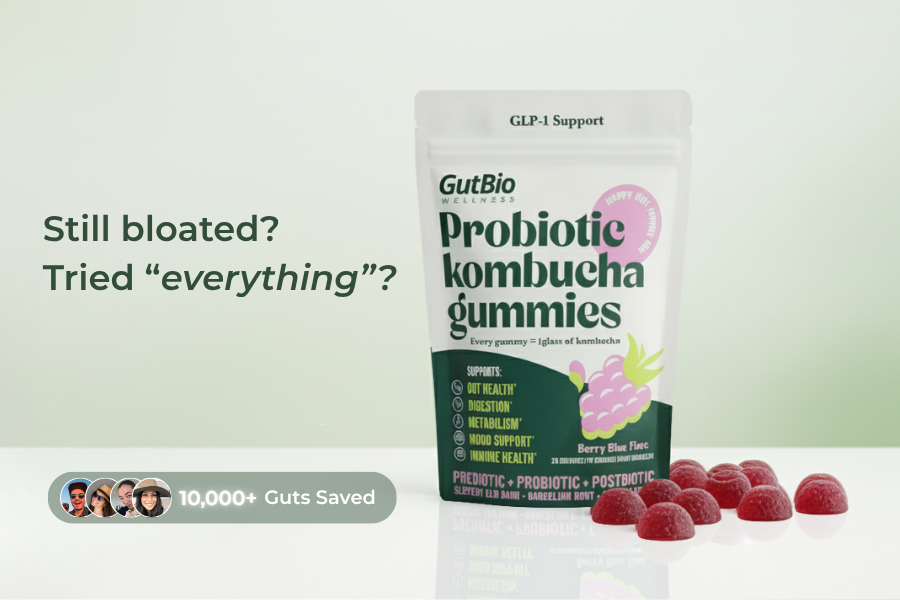
This is the core reason we built GutBio Kombucha Gummies the way we did. Rather than stuffing a capsule with one class of ingredient and hoping for the best, GutBio delivers a complete pre, pro, and postbiotic system — all three working together — in a low-sugar gummy format that is actually enjoyable to take every day. Consistency is everything with gut health, and if your supplement tastes like a chore, you will stop taking it.
The kombucha base matters too. Kombucha is one of the few naturally fermented foods with a documented history of supporting microbial diversity, and the fermentation process produces organic acids and beneficial compounds that work synergistically with the probiotic strains. If you want an honest breakdown of how the gummies are formulated and whether they actually deliver, this no-BS review of GutBio Kombucha Gummies covers it thoroughly.
Realistic Expectations: What You Can Actually Expect in 30, 60, and 90 Days
One of the reasons people give up on probiotics too early is that they expect the wrong things at the wrong times. Here is an honest timeline based on what the research and our customers report:
Days 1–14: The Foundation Phase
The first two weeks are about your microbiome adapting. Some people experience a temporary increase in gas or mild digestive changes as their gut bacteria shift. This is normal and typically resolves quickly. Most people start noticing reduced bloating and more regular digestion within the first week or two. Do not judge the product here — judge how you feel at the end of week four.
Days 15–30: The Bloating and Comfort Phase
By week three to four, the majority of people are experiencing noticeably less bloating, better regularity, and what many describe as feeling "lighter" even if the scale has not changed dramatically yet. This is the phase where GutBio's tagline — fix bloating in 30 days — becomes real for most customers. The inflammatory load in your gut is dropping, digestion is more efficient, and hunger signals are beginning to normalize.
Days 31–90: The Metabolism and Weight Phase
This is where the more clinically meaningful changes tend to show up for people who stick with it. With improved microbial diversity, reduced gut inflammation, and better nutrient absorption, your body is operating more efficiently. Pairing this with any modest improvement in your eating habits — less ultra-processed food, more fiber — is where people report the most meaningful results. The 90-Day Gut Reset Plan exists because three months is the window where real, lasting microbial change is established.
The Honest Objection Section: "Is This Actually Worth Trying?"
Fair question. You have probably tried things that did not work. The wellness industry has burned a lot of people with overpromised results and underdelivered products, and healthy skepticism is earned.
Here is what we can say honestly: GutBio Kombucha Gummies carry a 4.8-star rating from over 1,019 verified reviews. That number is hard to fake at scale. People are not leaving five-star reviews because they feel slightly better — they are leaving them because something genuinely shifted for them.
And if it does not work for you? There is a 60-day money-back guarantee. No complicated hoops to jump through. If you try it for 60 days and feel no different, you get your money back. That is the kind of policy a brand only offers when it is confident in what it is selling. For anyone wondering whether the risk is worth it — it is essentially zero financial risk with a real upside if your gut responds the way most customers' do.
The question is not really whether probiotics can help with weight loss and bloating — the research says they can, within realistic parameters. The question is whether you are taking the right product consistently enough to give your microbiome a genuine chance to change. Most people have never done that.
How to Get the Most Out of Probiotics for Weight and Bloating
Taking a probiotic daily is the starting point, not the whole plan. Here is what the research consistently shows amplifies results:
- Eat more fiber. Prebiotics feed your good bacteria. Vegetables, legumes, oats, and fruit are the raw material your microbiome needs to thrive. A probiotic without dietary fiber is like planting seeds with no soil.
- Reduce ultra-processed foods. Emulsifiers, artificial sweeteners, and preservatives found in processed foods have been shown in multiple studies to disrupt microbial diversity. You do not need to be perfect, but reducing these gives your probiotic a fighting chance.
- Be consistent. This is the single biggest predictor of results. Missing days regularly undermines the process. The gummy format exists specifically because it removes the "ugh, not another pill" barrier.
- Give it time. Three months is not a long commitment when you consider that gut dysbiosis often took years to develop. Be patient with the timeline.
- Manage stress. The gut-brain axis is real. Chronic stress directly damages microbial diversity through cortisol's effect on the gut lining. Even basic stress management — walking, sleep, breathing — supports what your probiotic is doing.
The Bottom Line
Can probiotics help with weight loss and bloating? Yes — with important caveats. They are not a magic pill, they work best as part of a broader healthy lifestyle, and they need to be the right formulation taken consistently over enough time. The research supports real benefits for gut-driven bloating, inflammation, and modest but meaningful metabolic improvements when the right strains are delivered effectively.
What GutBio Kombucha Gummies offer is a smarter starting point than most products on the market: a complete pre, pro, and postbiotic system, in a format you will actually stick with, backed by thousands of verified reviews and a guarantee that removes the risk of trying. If you have been struggling with bloating, sluggish digestion, or weight that does not seem to respond the way it should, your gut may be part of the story — and it is worth 90 days to find out.
Frequently Asked Questions
How long does it take for probiotics to help with bloating and weight loss?
Most people notice meaningful improvements in bloating within two to four weeks of consistent use, as the gut microbiome begins to rebalance. Weight-related changes tend to be more gradual — the clinical research points to three months as the window where more significant metabolic improvements emerge. This is why GutBio is structured around a 90-Day Gut Reset rather than a 30-day trial. Short-term use can show early results, but lasting microbial change requires sustained consistency.
Can probiotics replace diet and exercise for weight loss?
No, and any brand that implies otherwise is selling you something dishonest. Probiotics are a powerful support tool — they can improve how efficiently your body processes food, reduce inflammation that interferes with metabolism, normalize hunger hormones, and eliminate the bloating that often discourages people from staying consistent with healthy habits. But they work best alongside reasonable nutrition and movement, not instead of them. Think of a quality probiotic as upgrading the engine, not replacing the driver.
What if GutBio Kombucha Gummies do not work for me — is there a guarantee?
Yes. GutBio Kombucha Gummies come with a 60-day money-back guarantee. If you try the product for 60 days and do not feel a meaningful difference, you can request a full refund without jumping through complicated hoops. This policy reflects the brand's confidence in the product and removes the financial risk from trying it. Given that gut health changes can take a few weeks to become noticeable, 60 days gives you enough time to genuinely assess whether it is working for your body — and if it is not, you are protected.