

Can Probiotics Actually Help You Lose Weight? Here's What the Research Says
You have probably heard someone swear that adding a probiotic to their routine changed everything — flatter stomach, more energy, clothes fitting better. And you have probably also wondered whether that is real or just very enthusiastic placebo effect. The honest answer sits somewhere in the middle, and it is actually more interesting than either extreme. Because the research on whether probiotics can help with weight loss and bloating is growing fast — and what scientists are finding about the relationship between your gut and your waistline is genuinely surprising. Let us walk through what the evidence actually says, what it does not say, and how to set yourself up for results that last.
⭐ Save $54 on the 90-day plan — the time it takes for real gut microbiome change.
Your Gut Is Not Just a Digestive Organ — It Is a Metabolic Command Center
Here is something most people do not realize: your gut is home to roughly 38 trillion microorganisms. Bacteria, fungi, viruses — a whole ecosystem living inside you right now. And this community, collectively called the gut microbiome, does not just help you digest food. It influences how you store fat, how hungry you feel, how efficiently you burn calories, and even how your hormones behave.
Research published in journals like Nature and Cell Metabolism has shown that people with a diverse, balanced gut microbiome tend to have healthier body weights than those with a less diverse one. In landmark studies, when gut bacteria from obese mice were transplanted into lean, germ-free mice, the previously lean mice gained significantly more fat — even without eating more food. That is not a small finding. That is a signal that your gut bacteria are actively participating in your metabolism, not just sitting on the sidelines.
Two groups of bacteria in particular get a lot of attention in the weight research: Firmicutes and Bacteroidetes. People carrying excess weight tend to have a higher ratio of Firmicutes to Bacteroidetes. Firmicutes are especially efficient at extracting calories from food — which sounds useful in a famine, but in a world of abundant processed food, that efficiency can work against you. The good news is that the balance of these bacteria is not fixed. Diet, lifestyle, and yes, the right probiotics, can shift that ratio.
If you want a deeper dive into how these mechanisms work before you commit to any supplement routine, the Complete Beginner's Guide to Probiotics is a solid place to start — it breaks down the science without burying you in jargon.
Bloating vs. Belly Fat: Why the Difference Actually Matters
This is where people get confused — and honestly, the confusion is understandable because both look the same in the mirror. But bloating and belly fat are very different things, and understanding which one you are dealing with changes everything about how you approach it.
Bloating is your body reacting to something happening in your digestive tract — gas produced by bacteria fermenting food, inflammation in the gut lining, slow motility, or food sensitivities. When your gut microbiome is out of balance (a state called dysbiosis), you tend to produce more gas, experience more inflammation, and feel that uncomfortable fullness that makes your jeans feel two sizes too small by 3pm even when your morning weigh-in was totally normal.
Belly fat, on the other hand, is stored adipose tissue. It accumulates over time from a sustained caloric surplus, hormonal changes, chronic stress, poor sleep, and yes — a disrupted gut microbiome that contributes to increased fat storage and impaired insulin sensitivity.
Here is why this matters for setting realistic expectations: probiotics can address bloating relatively quickly. Many people notice meaningful changes in digestive comfort within two to four weeks of consistent use. Fat loss driven by microbiome changes is a slower, more indirect process — one that requires time, consistency, and the right dietary foundations working alongside your probiotic routine. Knowing which battle you are fighting helps you stay patient and stay consistent.
So when people ask whether probiotics can help with weight loss and bloating, the honest answer is: yes to both, but through different mechanisms and on different timescales.
What the Research Actually Says About Probiotics and Weight Loss
Let us get into the clinical evidence — because this is where things get both exciting and appropriately nuanced.
A 2019 meta-analysis published in Obesity Reviews pooled data from 27 randomized controlled trials and found that probiotic supplementation led to statistically significant reductions in body weight, BMI, and waist circumference compared to placebo. The effect sizes were modest — we are talking about an average of around 0.6 kg of additional weight loss — but the direction is consistent and the mechanisms are biologically plausible.
More recent research has shifted focus to specific strains. Lactobacillus gasseri has shown particular promise in reducing visceral fat — the deep abdominal fat linked to metabolic disease — in several Japanese trials. Lactobacillus rhamnosus has been associated with greater weight loss in women specifically, with researchers noting effects on appetite-regulating hormones like leptin. Bifidobacterium lactis has been linked to improvements in insulin sensitivity and reductions in body fat percentage.
Here is what the research does not say: probiotics alone, without any other changes, will not melt fat off your body. They are not a magic pill. What they can do is create a metabolic environment that makes your other healthy efforts more effective — improving how you process food, reducing inflammation that interferes with fat metabolism, and supporting the hormonal signals that regulate hunger and satiety.
One mechanism that deserves special mention is the gut-brain axis. Your gut produces roughly 90% of your body's serotonin and communicates directly with your brain via the vagus nerve. A healthier gut microbiome means better signaling around hunger, fullness, and even mood — which, if you have ever stress-eaten your way through a bag of chips, you know matters enormously for maintaining a healthy weight.
Thousands of people have already made the switch. ★★★★★ 4.8 from 1,019 reviews.
The 90-Day Gut Reset Plan — $66 (normally $120)
Start My 90-Day Reset →Why Most Probiotics Fall Short — and What to Look for Instead
Here is an uncomfortable truth about the probiotic market: most products are designed to look impressive on a label, not to actually survive long enough to reach your gut and do anything useful. A capsule boasting 50 billion CFUs means nothing if those bacteria are dead by the time they get past your stomach acid.
Effective gut support requires thinking beyond just probiotics in isolation. The latest science points to a three-part approach:
- Prebiotics — the dietary fibers that feed beneficial bacteria so they can thrive and multiply
- Probiotics — the live beneficial bacteria themselves, in strains that are clinically studied and delivered in a form that survives digestion
- Postbiotics — the bioactive compounds produced when bacteria ferment prebiotics, including short-chain fatty acids like butyrate that directly support gut lining integrity, reduce inflammation, and have been shown to influence fat storage
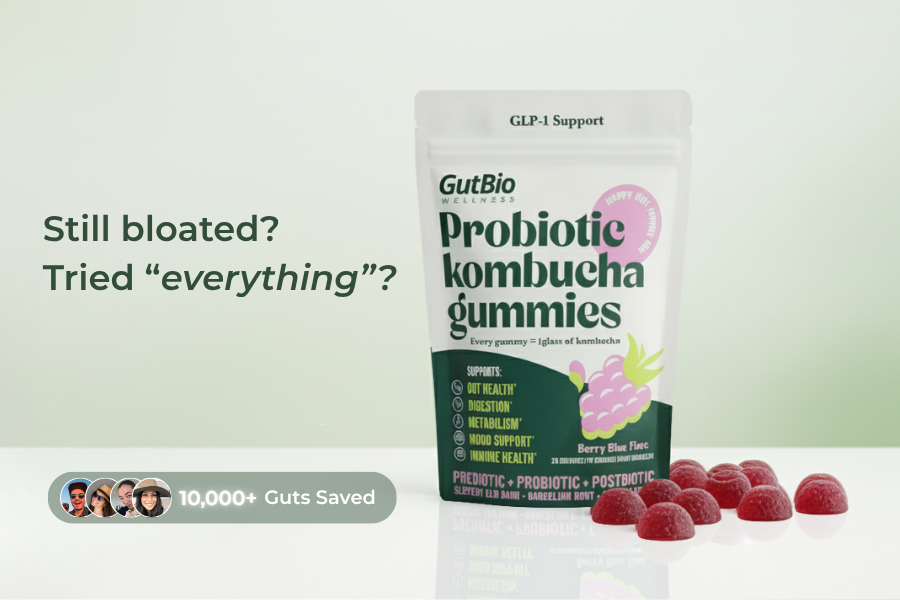
This is exactly the thinking behind GutBio Kombucha Gummies. Rather than delivering just one piece of the puzzle, GutBio combines pre, pro, and postbiotics in a single low-sugar gummy — powered by the fermentation science of kombucha. The postbiotic component in particular sets it apart from standard probiotic supplements, because postbiotics are stable, do not need to survive stomach acid like live bacteria do, and deliver benefits directly at the gut lining level.
And if you are skeptical — which is completely fair — there is an honest, no-spin breakdown worth reading: Do Kombucha Gummies Actually Work? An Honest, No-BS Review. It covers the real ingredients, what the science says about them, and what users have actually experienced.
Realistic Expectations: What 30, 60, and 90 Days Can Look Like
One of the most important things you can do before starting any gut health protocol is set honest expectations for yourself. Here is a rough framework based on what the clinical research and user experience tends to show:
Weeks 1–2: This is the adjustment phase. Some people feel slightly more gassy or bloated before they feel better — that is your microbiome shifting, not a sign something is wrong. Others notice improved regularity almost immediately. Energy can start to pick up as your gut lining begins to reduce low-grade inflammation.
Weeks 3–4: This is when most people start noticing meaningful bloating relief. The uncomfortable afternoon puffiness starts to ease. Digestion feels more predictable. Many GutBio users report this is when they first start feeling the tagline is earning its promise — fix bloating in 30 days — is more than just marketing language.
Months 2–3: This is where the deeper work happens. With a more balanced microbiome, your body's hormonal signaling around hunger and satiety improves. Your gut is producing more short-chain fatty acids that support healthy metabolism. If you are also eating reasonably well and moving your body, this is the window where people often notice their clothes fitting differently — not just the absence of bloat, but genuine changes in body composition. This is why a 90-day commitment is the approach most aligned with what the research actually shows.
The GutBio 90-Day Gut Reset Plan exists precisely because the science supports that timeline. And if you want to try it risk-free, there is a 60-day money-back guarantee behind every order — so you are not taking a leap of faith on your wallet.
Addressing the Skeptic in the Room
Let us be direct about the objections worth taking seriously.
"Does it really work, or is it just the placebo effect?" The placebo effect is real in any health intervention — but the mechanistic research on probiotics, prebiotics, and postbiotics is not placebo-dependent. We can measure changes in gut bacteria composition, inflammation markers, short-chain fatty acid production, and metabolic biomarkers in clinical settings. The effects are measurable. Whether any individual product delivers on that science depends on formulation quality, dosing, and consistency of use.
"I have tried probiotics before and felt nothing." This is probably the most common objection — and the most valid one. Single-strain probiotic capsules with poor survivability often deliver very little. The research increasingly shows that strain diversity, survivability, and the presence of prebiotics and postbiotics alongside probiotics makes an enormous difference. If your previous probiotic experience was underwhelming, the formulation was likely the issue, not your gut.
"Is it worth the money?" Consider what you are spending on antacids, digestive aids, and the rotating cast of supplements that address symptoms without touching root causes. A protocol that actually supports gut microbiome diversity and gut lining integrity works upstream of most of those symptoms. Over 1,019 reviews averaging 4.8 stars suggests a lot of people found the answer yes — but with a 60-day money-back guarantee, you have nothing to lose by finding out for yourself.
The Bottom Line on Probiotics, Bloating, and Weight Loss
The question of whether probiotics can help with weight loss and bloating does not have a simple yes or no answer — and anyone who tells you it does is either selling something oversimplified or underselling what the science actually shows.
Here is the honest summary:
- Your gut microbiome genuinely influences metabolism, fat storage, inflammation, and appetite — this is not fringe science anymore
- Probiotics, particularly the right strains delivered with prebiotics and postbiotics, can meaningfully shift that microbiome in a beneficial direction
- Bloating relief tends to come first, within weeks — fat loss support develops over months of consistent use alongside a reasonable diet and lifestyle
- No probiotic replaces the fundamentals of sleep, movement, and whole-food nutrition — but the right probiotic can make those fundamentals work better
- Formulation quality matters enormously — and most supplements on the market do not meet the bar set by current research
If you have been wondering whether your gut is quietly working against your weight goals — and why no amount of "eating better" seems to fully fix the bloating — the answer might genuinely lie in what is happening at the microbiome level. GutBio Kombucha Gummies were built specifically for people in that position: the ones who have tried things, done the reading, and want something that actually addresses the root cause rather than masking the symptoms.
Frequently Asked Questions
How long does it take for probiotics to help with weight loss and bloating?
Bloating improvements tend to show up earliest — many people notice meaningful relief within two to four weeks of consistent daily use. Weight-related changes, which are driven by deeper shifts in gut microbiome composition, metabolism, and hormonal signaling, typically become noticeable after two to three months. This is why a 90-day commitment produces the most meaningful, lasting results. Consistency matters far more than the number of CFUs on a label.
What makes GutBio Kombucha Gummies different from a regular probiotic?
Most probiotics on the market deliver live bacteria only — and many of those bacteria do not survive the journey through stomach acid to reach your lower gut where they are needed. GutBio Kombucha Gummies combine prebiotics (to feed beneficial bacteria), probiotics (live strains with clinical backing), and postbiotics (stable bioactive compounds produced through fermentation that support the gut lining directly). This three-part approach is where current gut health science is pointing, and it is why users consistently report results that single-ingredient probiotics never delivered for them.
What if I try it and it does not work for me? Is there a guarantee?
Yes — every order of GutBio Kombucha Gummies is backed by a full 60-day money-back guarantee. That means you have two months to use the product, assess your results, and decide whether it delivered on its promise. If it did not, you can request a full refund, no hoops to jump through. The guarantee exists because the confidence in the product is genuine — but it also means your financial risk is essentially zero. You can start your gut reset and see what your body does before you are fully committed.