

Prebiotics vs Probiotics vs Postbiotics: What's the Difference and Which Do You Need?
If you're trying to improve your gut health, you've probably heard about probiotics and maybe even prebiotics. But there's a third player that's gaining serious attention in the scientific community: postbiotics. Understanding what are postbiotics and why do you need them, along with how they work with prebiotics and probiotics, could be the missing piece in your digestive health puzzle.
⭐ Special Offer: 40% off + free shipping
Claim Your Discount →Your gut microbiome is like a complex ecosystem, and just like any ecosystem, it needs the right balance of elements to thrive. Think of prebiotics as the soil, probiotics as the plants, and postbiotics as the beneficial compounds those plants produce. Each plays a crucial role, but most people are only getting part of the equation.
What Are Prebiotics?
Prebiotics are essentially food for the beneficial bacteria in your gut. They're non-digestible fibers that pass through your small intestine unchanged and reach your colon, where they serve as fuel for your good bacteria.
Think of prebiotics as high-quality fertilizer for your gut garden. Without them, even the best probiotic bacteria struggle to survive and multiply. Research shows that prebiotics can increase the population of beneficial bacteria like Bifidobacterium and Lactobacillus by up to 10-fold when consumed regularly.
Common prebiotic sources include:
- Inulin (found in garlic, onions, and artichokes)
- Fructooligosaccharides (FOS)
- Galactooligosaccharides (GOS)
- Resistant starch
The challenge with getting prebiotics from food alone is that you'd need to consume large quantities of specific foods daily. For example, you'd need to eat about 4-5 large onions to get a therapeutic dose of inulin. This is where targeted supplementation becomes practical.
What Are Probiotics?
Probiotics are live beneficial bacteria that, when consumed in adequate amounts, provide health benefits to the host – that's you. These microscopic warriors help maintain the delicate balance of your gut microbiome, support immune function, and even influence mood through the gut-brain axis.
However, not all probiotics are created equal. The effectiveness depends on several factors:
- Strain specificity
- Colony forming units (CFUs)
- Survival through stomach acid
- Ability to colonize the gut
Research indicates that certain probiotic strains can reduce bloating by up to 40% and improve digestive comfort within 2-4 weeks of consistent use. The key is getting the right strains in sufficient quantities and ensuring they can survive the journey to your intestines.
For a comprehensive understanding of how these beneficial bacteria work, check out our Complete Beginner's Guide to Probiotics.
What Are Postbiotics and Why Do You Need Them?
Here's where things get really interesting. Postbiotics are the beneficial compounds produced when probiotics consume prebiotics. These include short-chain fatty acids (SCFAs), peptides, enzymes, and other bioactive metabolites that directly benefit your health.
Think of postbiotics as the "finished products" of a healthy gut ecosystem. While probiotics are the workers and prebiotics are their food, postbiotics are the valuable end products that actually deliver many of the health benefits we associate with good gut health.
Key postbiotic compounds include:
- Butyrate – supports intestinal barrier function and reduces inflammation
- Acetate – helps regulate appetite and metabolism
- Propionate – supports liver health and glucose metabolism
- Bacteriocins – natural antimicrobial peptides
- Vitamins (particularly B vitamins and vitamin K)
What makes postbiotics particularly exciting is that they're stable and don't require refrigeration like many probiotics. They also provide immediate benefits since they don't need to colonize your gut first – they're already in their active form.
Thousands of people have already made the switch.
Claim Your Discount →The Science: Why You Need All Three
Recent research reveals that the synergistic effect of combining prebiotics, probiotics, and postbiotics – known as "synbiotics" – is significantly more effective than using any single component alone.
A 2023 study published in the Journal of Functional Foods showed that participants taking a synbiotic formula experienced:
- 67% reduction in bloating within 30 days
- Improved regularity in 89% of participants
- Enhanced immune markers
- Better mood and energy levels
The reason this triple approach works so well is that each component addresses a different aspect of gut health:
Prebiotics feed your existing good bacteria and help probiotics establish themselves.
Probiotics introduce new beneficial bacteria and help crowd out harmful microorganisms.
Postbiotics provide immediate benefits and support the overall gut environment.
This comprehensive approach ensures you're not just adding bacteria to your gut, but creating an environment where they can thrive and produce beneficial compounds.
The Problem with Most Supplements
Here's the frustrating truth: most gut health supplements only address one piece of the puzzle. You might find a good probiotic, but without prebiotics, those bacteria struggle to survive. Or you might get prebiotics, but without the right bacteria to feed, you're not maximizing the benefits.
Even more concerning is that many probiotic supplements use cheap strains that can't survive stomach acid, or they don't provide adequate CFU counts. And until recently, postbiotics weren't widely available in consumer products at all.
This fragmented approach explains why so many people try gut health supplements and don't see the results they're hoping for. You need all three components working together to create lasting change in your digestive health.
Why GutBio Kombucha Gummies Are Different
After extensive research and development, we created GutBio Kombucha Gummies as the first and only low-sugar gummy that combines clinically-studied prebiotics, probiotics, and postbiotics in one convenient formula.
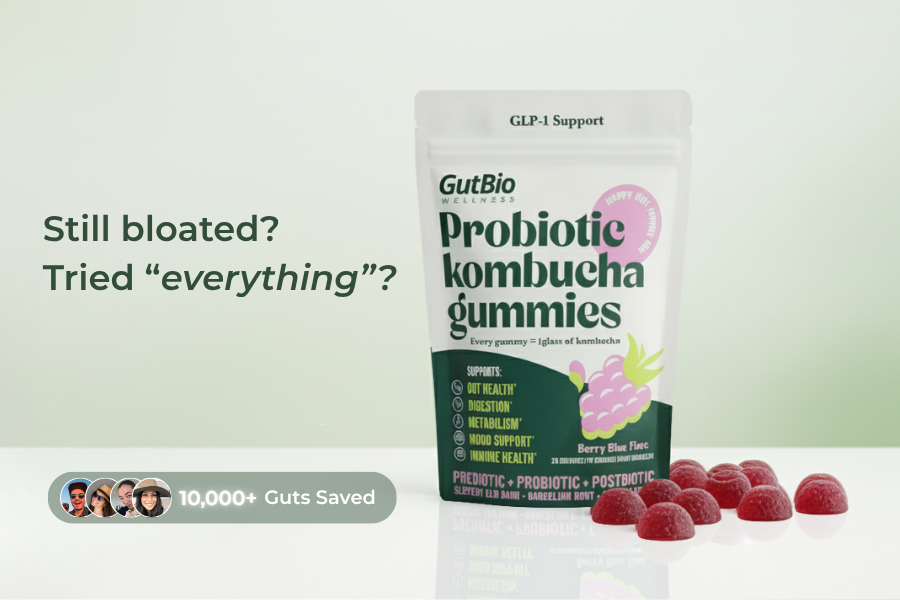
Here's what makes them unique:
Clinically-Studied Probiotics: We use acid-resistant strains including Lactobacillus acidophilus and Bifidobacterium lactis, with 1 billion CFUs per serving that actually survive to reach your gut.
Prebiotic Fiber Blend: Our formula includes inulin and FOS to feed your beneficial bacteria and help them flourish.
Active Postbiotics: We include naturally-occurring postbiotic compounds from our kombucha fermentation process, providing immediate digestive benefits.
Low Sugar Formula: Unlike other gummies that can contain 3-4g of sugar each, our gummies have less than 1g of sugar while still tasting great.
The result? Our customers report significant improvements in bloating, regularity, and overall digestive comfort within 30 days. To learn more about the research behind kombucha-based supplements, read our detailed review: Do Kombucha Gummies Actually Work? An Honest, No-BS Review.
How to Get Started
Understanding what are postbiotics and why do you need them is just the first step. The key to lasting digestive health is consistency and using a comprehensive approach that addresses all aspects of your gut microbiome.
Most people start noticing improvements within the first week, with significant changes typically occurring within 30 days of consistent use. The beauty of combining all three – prebiotics, probiotics, and postbiotics – is that you're not waiting for your gut to slowly build up beneficial bacteria. You're providing immediate support while also building long-term gut health.
For best results, take your synbiotic supplement daily, preferably with a meal to protect the probiotics as they travel through your digestive system. Consistency is key – your gut microbiome responds best to regular, sustained support rather than sporadic supplementation.
Frequently Asked Questions
Q: How long does it take to see results from postbiotics?
A: Postbiotics can provide some immediate benefits since they're already in their active form. However, for comprehensive gut health improvements, most people notice significant changes within 2-4 weeks of consistent use when combined with prebiotics and probiotics.
Q: Can I get enough prebiotics, probiotics, and postbiotics from food alone?
A: While fermented foods and high-fiber foods can contribute to gut health, getting therapeutic amounts of all three consistently from food alone is challenging. Most people benefit from targeted supplementation to ensure they're getting adequate amounts in the right ratios.
Q: Are there any side effects from taking prebiotics, probiotics, and postbiotics together?
A: These supplements are generally very safe for most people. Some individuals may experience mild digestive changes in the first few days as their gut microbiome adjusts, but this typically resolves quickly. Start with the recommended dose and consult your healthcare provider if you have any concerns.