

Prebiotics vs Probiotics vs Postbiotics: What's the Difference and Which Do You Need?
If you've been exploring gut health solutions, you've probably come across terms like prebiotics and probiotics. But there's a third player in the gut health game that's gaining serious attention from researchers and health experts: postbiotics. Understanding what postbiotics are and why you need them, along with how they work with prebiotics and probiotics, could be the key to finally solving your digestive issues.
⭐ Special Offer: 40% off + free shipping
Try GutBio Risk Free →The world of gut health can feel overwhelming with so many different supplements and approaches available. But once you understand the distinct roles that prebiotics, probiotics, and postbiotics play in your digestive system, you'll be equipped to make informed decisions about your gut health strategy.
What Are Prebiotics and How Do They Work?
Prebiotics are essentially food for the beneficial bacteria already living in your gut. These are non-digestible fiber compounds that pass through your small intestine unchanged and reach your colon, where they serve as fuel for your good gut bacteria.
Think of prebiotics as fertilizer for your internal garden. Just like plants need nutrients to grow and thrive, the beneficial bacteria in your gut need specific types of fiber to multiply and function optimally. Common prebiotic sources include garlic, onions, bananas, asparagus, and Jerusalem artichokes.
When you consume prebiotics, they stimulate the growth and activity of beneficial bacteria species like Bifidobacterium and Lactobacillus. This process helps create a more favorable environment in your gut, potentially crowding out harmful bacteria and supporting overall digestive health.
Research shows that prebiotic consumption can lead to improved mineral absorption, enhanced immune function, and better regularity. However, prebiotics alone may not be enough if you're starting with an imbalanced gut microbiome or dealing with significant digestive issues.
Understanding Probiotics: The Live Beneficial Bacteria
Probiotics are live microorganisms that, when consumed in adequate amounts, provide health benefits to the host. These are the actual "good bacteria" that you're introducing directly into your digestive system through supplements or fermented foods.
The most common probiotic strains include various species of Lactobacillus, Bifidobacterium, and Saccharomyces boulardii. Each strain has been studied for specific health benefits, from improving lactose digestion to supporting immune function and even potentially influencing mood through the gut-brain axis.
For those new to probiotics, our Complete Beginner's Guide to Probiotics provides comprehensive information about getting started safely and effectively.
While probiotics can be incredibly beneficial, they face challenges in your digestive system. Many probiotic bacteria struggle to survive the acidic environment of your stomach, and even those that make it to your colon may have difficulty establishing themselves in an already-populated microbial community.
This is where the concept of postbiotics becomes particularly interesting and important for comprehensive gut health support.
What Are Postbiotics and Why Do You Need Them?
Postbiotics represent the next evolution in gut health science. These are the beneficial compounds produced by probiotic bacteria during their metabolic processes - essentially, the valuable byproducts that result when good bacteria break down prebiotics in your gut.
What makes postbiotics unique is that they're the actual active compounds responsible for many of the health benefits we associate with good gut bacteria. These include short-chain fatty acids (SCFAs) like butyrate, acetate, and propionate, as well as enzymes, peptides, and organic acids.
Here's why postbiotics are gaining attention from researchers: they provide direct benefits without requiring live bacteria to survive and colonize your gut. When you consume postbiotics, you're getting the beneficial compounds immediately, regardless of your current gut microbiome status or digestive conditions.
Studies suggest that postbiotics may help reduce inflammation, strengthen the intestinal barrier, support immune function, and even influence metabolic health. For people dealing with bloating, irregular digestion, or those who haven't seen results from traditional probiotic supplements, postbiotics offer a promising alternative approach.
Thousands of people have already made the switch.
Try GutBio Risk Free →The Science Behind Each Approach
Understanding the scientific mechanisms behind prebiotics, probiotics, and postbiotics helps explain why a comprehensive approach might be more effective than relying on any single strategy.
Prebiotic research has consistently shown that these fiber compounds can selectively stimulate beneficial bacteria growth. A 2017 study published in the Journal of Functional Foods found that prebiotic supplementation increased beneficial bacteria populations by up to 40% within just two weeks.
Probiotic research spans decades, with thousands of studies demonstrating various health benefits. However, research also reveals significant variability in individual responses to probiotic supplementation, largely due to differences in existing gut microbiomes, diet, and lifestyle factors.
Postbiotic research, while newer, is rapidly expanding. Recent studies suggest that postbiotics may offer more consistent benefits since they don't rely on bacterial colonization. A 2021 review in the International Journal of Molecular Sciences highlighted postbiotics' potential for supporting gut barrier function and reducing systemic inflammation.
The emerging consensus among gut health researchers is that the most effective approach combines all three elements, creating a synergistic effect that addresses gut health from multiple angles simultaneously.
Which Approach Is Right for You?
The choice between prebiotics, probiotics, and postbiotics doesn't have to be either/or. Your individual needs may depend on your current gut health status, digestive symptoms, and health goals.
If you're dealing with chronic bloating, irregular digestion, or haven't responded well to traditional probiotic supplements, postbiotics might be particularly beneficial. They work immediately upon consumption and don't require specific gut conditions to be effective.
For those interested in the potential connection between gut health and weight management, research suggests that all three approaches may play complementary roles. You can learn more about this connection in our article on Can Probiotics Actually Help You Lose Weight?
People with sensitive digestive systems or those taking antibiotics might find that starting with postbiotics provides gentler support while their gut microbiome rebalances. Meanwhile, those with generally healthy digestion might benefit from the comprehensive support that comes from combining all three approaches.
Why Getting All Three Matters: The Synergistic Effect
The most compelling research in gut health is pointing toward the synergistic benefits of combining prebiotics, probiotics, and postbiotics. This approach, sometimes called "synbiotics," addresses gut health comprehensively rather than relying on a single mechanism.
Here's how they work together: Prebiotics feed your existing beneficial bacteria and any probiotics you consume, helping them thrive and multiply. Probiotics introduce additional beneficial strains that can contribute to microbial diversity. Postbiotics provide immediate beneficial compounds while also supporting the environment where prebiotics and probiotics can work most effectively.
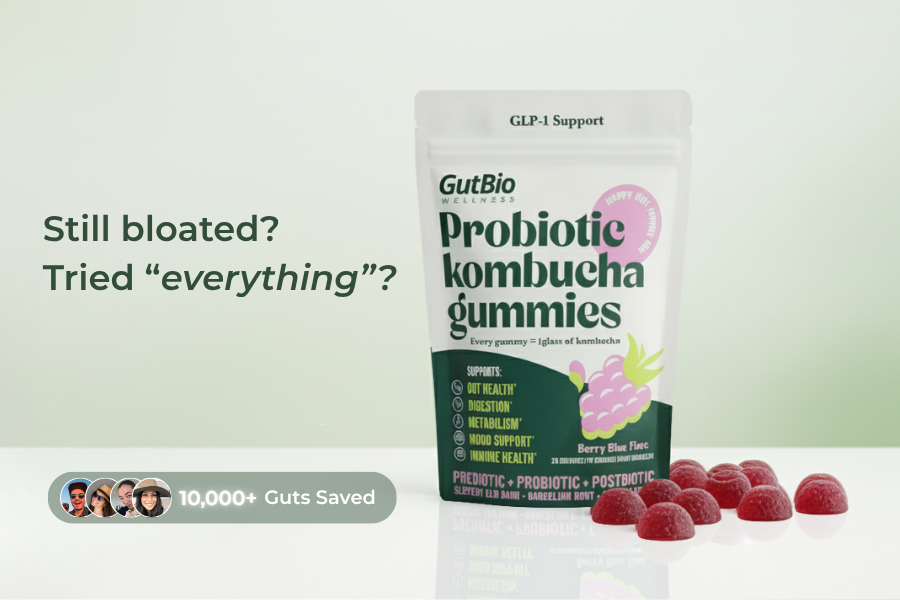
This is exactly why we developed GutBio Kombucha Gummies - the only low-sugar gummy that combines all three elements in one convenient, science-backed formula. Our unique approach delivers prebiotics to feed beneficial bacteria, probiotics to introduce helpful strains, and postbiotics to provide immediate support for your digestive system.
Many people report noticeable improvements in bloating, regularity, and overall digestive comfort within the first few weeks of taking GutBio. The combination approach means you're not just hoping that live bacteria will establish themselves in your gut - you're getting immediate postbiotic benefits while also supporting long-term gut health with prebiotics and probiotics.
For those curious about the effectiveness of kombucha-based supplements, our detailed analysis in Do Kombucha Gummies Actually Work? An Honest, No-BS Review provides transparent insights into the research and real-world results.
Frequently Asked Questions
How long does it take to see results from postbiotics?
Unlike probiotics, which may take weeks to establish in your gut, postbiotics can begin providing benefits immediately since they're already the active compounds your body can use. Many people report improvements in digestive comfort within the first week, with more significant changes typically seen within 2-4 weeks of consistent use.
Can I take prebiotics, probiotics, and postbiotics together safely?
Yes, combining all three is not only safe but potentially more effective than using any single approach alone. This synergistic strategy addresses gut health from multiple angles simultaneously. However, if you're new to gut health supplements, starting gradually can help your system adjust comfortably.
Are postbiotics better than probiotics for people with sensitive stomachs?
Postbiotics may be gentler for people with sensitive digestive systems because they don't introduce live bacteria that need to establish themselves in your gut. Since postbiotics are the beneficial compounds that result from bacterial activity, they can provide support without the potential for temporary digestive adjustment that sometimes occurs with probiotic supplementation.