

Prebiotics vs Probiotics vs Postbiotics: What's the Difference and Which Do You Need?
If you've ever felt confused about the difference between prebiotics, probiotics, and postbiotics, you're not alone. These three terms are often used interchangeably, but they represent distinct components of gut health that work together in fascinating ways. Understanding what are postbiotics and why you need them, along with their counterparts, can transform how you approach digestive wellness and overall health.
⭐ Special Offer: 40% off + free shipping
Try GutBio Risk Free →Your gut microbiome is home to trillions of bacteria, and maintaining the right balance is crucial for everything from digestion to immune function to mental health. But here's what most people don't realize: it's not just about getting more good bacteria. The complete picture involves feeding those bacteria properly and harnessing the powerful compounds they produce.
What Are Prebiotics?
Think of prebiotics as fertilizer for your gut garden. These are specialized plant fibers that your human cells can't digest, but your beneficial gut bacteria absolutely love to feast on. When you consume prebiotics, you're essentially providing fuel for the good bacteria already living in your intestines.
Prebiotics are found naturally in foods like garlic, onions, bananas, asparagus, and Jerusalem artichokes. The most well-researched prebiotic fibers include inulin, fructooligosaccharides (FOS), and galactooligosaccharides (GOS).
Here's what makes prebiotics so important:
- They selectively feed beneficial bacteria like Bifidobacterium and Lactobacillus
- They help increase the population of good bacteria naturally
- They're resistant to stomach acid, so they reach your colon intact
- They support the production of short-chain fatty acids, which benefit gut lining health
Research published in the Journal of Functional Foods shows that regular prebiotic consumption can increase beneficial bacteria populations by up to 10-fold within just a few weeks.
What Are Probiotics?
Probiotics are live beneficial bacteria that, when consumed in adequate amounts, provide health benefits to the host—that's you. These are the "good guys" that help maintain a healthy balance in your gut microbiome.
The most common probiotic strains include various species of Lactobacillus, Bifidobacterium, and Saccharomyces boulardii (a beneficial yeast). Each strain offers unique benefits, which is why diversity matters when choosing probiotic supplements.
Probiotics work by:
- Competing with harmful bacteria for space and resources
- Producing antimicrobial compounds that inhibit pathogen growth
- Supporting immune system function
- Helping maintain the integrity of your intestinal barrier
- Assisting in the production of vitamins like B12, K2, and folate
Clinical studies have demonstrated that probiotics can help with digestive issues, boost immune function, and even support mental health through the gut-brain axis. For a deeper dive into how probiotics work, check out our Complete Beginner's Guide to Probiotics.
What Are Postbiotics and Why Do You Need Them?
Now we come to the newest player in the gut health game: postbiotics. So what are postbiotics and why do you need them? Postbiotics are the bioactive compounds produced when probiotics consume prebiotics. Think of them as the beneficial waste products or metabolites created by good bacteria.
These compounds include:
- Short-chain fatty acids (SCFAs) like butyrate, acetate, and propionate
- Peptides and amino acids
- Enzymes and organic acids
- Cell wall fragments from beneficial bacteria
- Vitamins and other bioactive molecules
What makes postbiotics particularly exciting is that they provide many of the same benefits as probiotics but with some unique advantages:
Immediate Action: Unlike probiotics, which need to establish themselves in your gut, postbiotics go to work immediately upon consumption.
Stability: Postbiotics don't require refrigeration and won't lose potency over time like live probiotics can.
Safety: Since they're not live organisms, postbiotics are safe for everyone, including immunocompromised individuals.
Targeted Benefits: Specific postbiotic compounds can be isolated for targeted health benefits.
Recent research in Nutrients journal found that postbiotic supplementation can reduce inflammation markers by up to 30% and improve gut barrier function more rapidly than probiotics alone.
Thousands of people have already made the switch.
Try GutBio Risk Free →The Synergistic Effect: Why You Need All Three
Here's where the magic happens: prebiotics, probiotics, and postbiotics work together synergistically. This three-way relationship is called the "gut health triangle," and understanding it is key to optimizing your digestive wellness.
When you combine all three:
- Prebiotics feed the probiotics, helping them thrive
- Well-fed probiotics produce more postbiotics
- Postbiotics support gut barrier function, creating a better environment for probiotics
- The cycle continues, creating a self-reinforcing system of gut health
Studies show that this synergistic approach can be up to 3x more effective than taking any single component alone. The combined effect leads to:
- Better digestive function and reduced bloating
- Stronger immune system response
- Improved mood and cognitive function
- Enhanced nutrient absorption
- Better sleep quality
Introducing GutBio Kombucha Gummies: The Complete Solution
Understanding what are postbiotics and why you need them is one thing, but finding a product that delivers all three components effectively is another challenge entirely. That's exactly why we created GutBio Kombucha Gummies—the only low-sugar gummy that combines prebiotics, probiotics, and postbiotics in one convenient, delicious package.
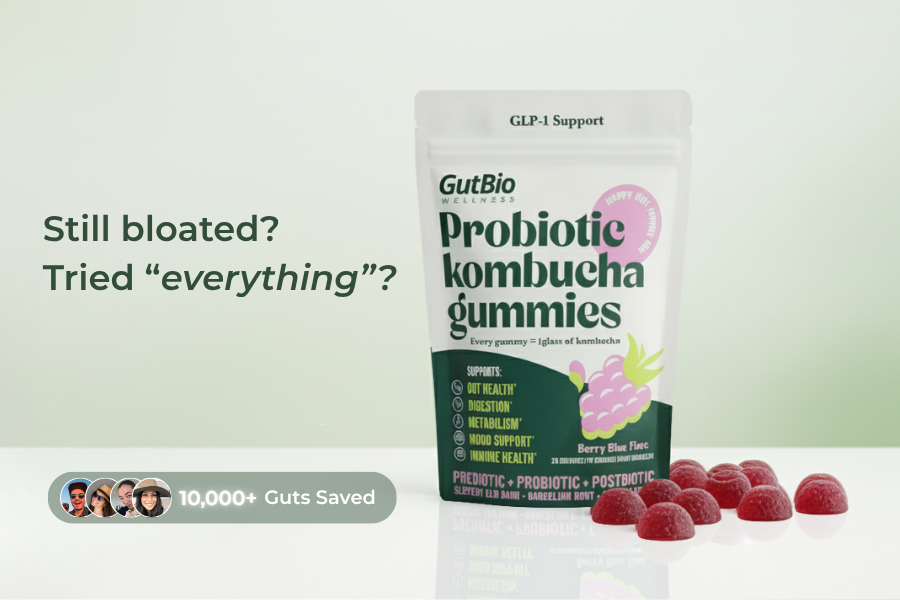
Our unique formula harnesses the power of kombucha fermentation to deliver:
Prebiotics: We include clinically-studied prebiotic fibers that selectively feed beneficial bacteria.
Probiotics: Our gummies contain multiple strains of live beneficial bacteria, including Lactobacillus and Bifidobacterium species.
Postbiotics: Through our proprietary kombucha fermentation process, we capture the beneficial metabolites and compounds produced during fermentation.
What sets GutBio apart:
- Only 2g of sugar per serving (compared to 4-8g in other gummies)
- Shelf-stable formula that doesn't require refrigeration
- Delicious natural fruit flavors
- Third-party tested for purity and potency
- Backed by our 30-day "Fix Your Bloating" guarantee
Many customers report noticeable improvements in bloating, digestive comfort, and energy levels within just 7-14 days. If you're curious about the science behind kombucha's gut health benefits, read our detailed analysis: Do Kombucha Gummies Actually Work? An Honest, No-BS Review.
Making the Right Choice for Your Gut Health
Now that you understand what are postbiotics and why you need them, along with how they work with prebiotics and probiotics, you're equipped to make informed decisions about your gut health.
The key takeaways:
- Prebiotics feed good bacteria
- Probiotics are the good bacteria themselves
- Postbiotics are the beneficial compounds good bacteria produce
- All three work together for optimal gut health
- Combined supplementation is more effective than individual components
Whether you're dealing with chronic bloating, irregular digestion, low energy, or simply want to optimize your overall health, supporting your gut microbiome with all three components gives you the best chance of success.
Frequently Asked Questions
How long does it take to see results from prebiotics, probiotics, and postbiotics?
Most people notice improvements in digestive comfort and bloating within 7-14 days, with more significant changes in gut microbiome composition occurring over 4-12 weeks of consistent use. Postbiotics tend to work fastest since they don't need to establish themselves in your gut first.
Can you take prebiotics, probiotics, and postbiotics if you have digestive issues?
Yes, this combination is often beneficial for digestive issues. However, some people with severe digestive conditions like SIBO may need to start slowly or work with a healthcare provider. Postbiotics are generally the safest option for those with sensitive digestive systems since they don't contain live bacteria.
What's the difference between postbiotics and fermented foods?
Fermented foods like yogurt and kefir contain some postbiotics naturally, but they primarily provide probiotics. Dedicated postbiotic supplements or products like GutBio Kombucha Gummies are specifically designed to deliver concentrated amounts of beneficial metabolites alongside prebiotics and probiotics for maximum effectiveness.