

Can Probiotics Actually Help You Lose Weight? Here's What the Research Says
If you've been scrolling through social media or health forums lately, you've probably seen claims about probiotics being the secret to effortless weight loss. But can probiotics help with weight loss and bloating, or is this just another wellness trend that's too good to be true? Let's dive into what the actual science says about the gut-weight connection and set realistic expectations about what probiotics can and cannot do for your body.
⭐ Special Offer: 40% off + free shipping
Get Free Shipping Today →The Gut-Weight Connection: What Scientists Have Discovered
Your gut microbiome—the trillions of bacteria living in your digestive system—plays a much bigger role in your weight than most people realize. Research has revealed that the composition of gut bacteria differs significantly between lean and overweight individuals, with obese people typically having less bacterial diversity in their microbiomes.
Studies have shown that certain strains of bacteria can influence how your body processes food, stores fat, and even regulates hunger hormones. The gut produces hormones like GLP-1 and peptide YY, which directly impact satiety and food intake. When your gut bacteria are balanced, these hormonal signals work more effectively.
However, it's crucial to understand that gut health is just one piece of the weight management puzzle. While probiotics can support your overall digestive health and potentially influence weight-related factors, they're not a magic solution that will melt away pounds without other lifestyle changes.
How Gut Bacteria Actually Affects Your Metabolism
Your gut bacteria influence your metabolism through several key mechanisms. First, they help break down dietary fiber into short-chain fatty acids (SCFAs), which can boost your metabolic rate and improve insulin sensitivity. These SCFAs also help regulate inflammation, which is closely linked to metabolic health.
Certain bacterial strains, particularly those in the Lactobacillus and Bifidobacterium families, have been shown to influence how efficiently your body extracts calories from food. Some strains may help your body absorb fewer calories from the same amount of food, while others support better blood sugar regulation.
The gut-brain axis also plays a role here. Your gut bacteria communicate with your brain through the vagus nerve, potentially influencing cravings, appetite, and even mood—all factors that can impact your eating behaviors and weight management efforts.
Bloating vs. Fat Loss: Understanding the Difference
Here's where we need to get really honest about expectations. When people ask "can probiotics help with weight loss and bloating," they're often conflating two very different issues. Probiotics are much more effective at addressing bloating than they are at promoting significant fat loss.
Bloating is often caused by digestive issues, food intolerances, or imbalances in gut bacteria. When you improve your gut health with probiotics, you may notice that your stomach feels flatter and your clothes fit better—but this is primarily due to reduced inflammation and better digestion, not fat loss.
Many people mistake this reduction in bloating for weight loss, and while the visual and comfort improvements are real and valuable, it's important to understand what's actually happening. You might see the scale drop a few pounds due to reduced water retention and better digestion, but this isn't the same as burning fat tissue.
Thousands of people have already made the switch.
Get Free Shipping Today →What the Research Actually Shows About Probiotics and Weight
Let's look at the concrete evidence. Several clinical trials have examined probiotics' effects on weight management, with mixed but generally modest results. A 2018 meta-analysis of randomized controlled trials found that probiotic supplementation led to an average weight loss of about 1.3 pounds over 8-12 weeks compared to placebo groups.
The most promising research has focused on specific strains. Lactobacillus gasseri showed particularly interesting results in one study, where participants lost about 8.5% of belly fat over 12 weeks. However, when participants stopped taking the probiotic, the weight returned, suggesting that consistent use is necessary for maintaining benefits.
Studies on Lactobacillus rhamnosus have shown more pronounced effects in women than men, with some participants losing up to 50% more weight when probiotics were combined with a calorie-controlled diet compared to diet alone. But again, the effects were modest—we're talking about a few extra pounds, not dramatic transformations.
Setting Realistic Expectations: What Probiotics Can and Cannot Do
Let's be completely transparent about what you can realistically expect from probiotics when it comes to weight management. Probiotics are not going to replace a healthy diet and exercise routine. They won't cause dramatic weight loss on their own, and anyone promising you'll lose 20 pounds from probiotics alone is not being honest with you.
What probiotics can do is support your overall digestive health, which may make your weight management efforts more effective. They can help reduce bloating, improve digestion, support better nutrient absorption, and potentially influence factors like inflammation and insulin sensitivity that indirectly affect weight.
If you're looking for significant weight loss, probiotics should be viewed as a supportive tool alongside proven strategies like creating a moderate calorie deficit through diet and exercise, getting adequate sleep, managing stress, and staying hydrated.
How to Choose the Right Probiotic for Digestive Support
If you're interested in trying probiotics to support your digestive health and potentially help with bloating, quality matters enormously. Many probiotic supplements on the market don't contain the strains or quantities listed on their labels, and some don't survive the manufacturing process or stomach acid.
Look for products that contain multiple strains, as diversity is important for gut health. The most research-backed strains for metabolic benefits include various Lactobacillus and Bifidobacterium species. You'll also want to ensure the product has been third-party tested and stored properly.
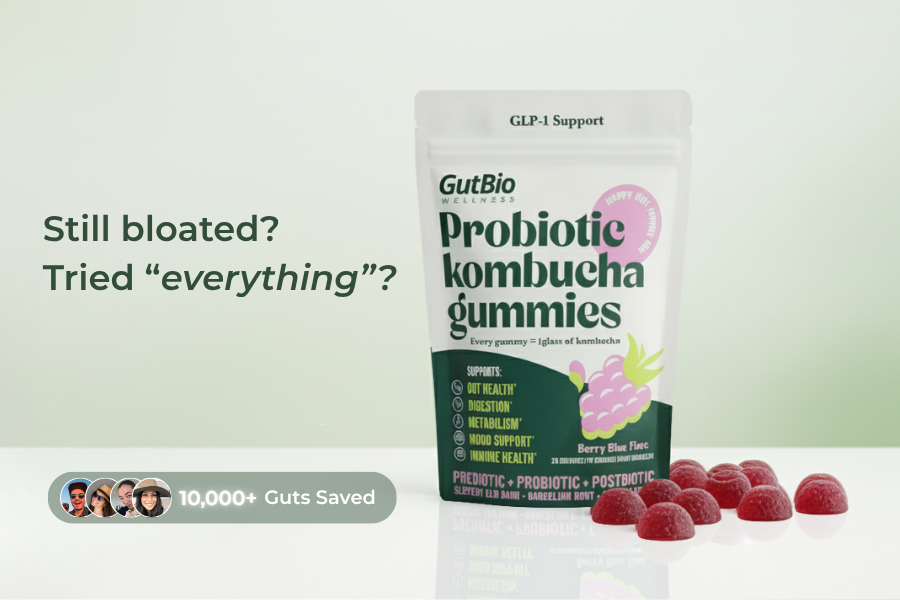
Our GutBio Kombucha Gummies are specifically formulated with pre, pro, and postbiotics to support comprehensive gut health. Unlike many probiotic supplements that only provide live bacteria, our gummies include prebiotics to feed the good bacteria and postbiotics to provide additional metabolic benefits.
The Bottom Line on Probiotics and Weight Management
So, can probiotics help with weight loss and bloating? The honest answer is: somewhat, but not in the way most people hope. Probiotics can definitely help with bloating and digestive issues, which may make you look and feel less bloated. They may also provide modest support for weight management efforts when combined with a healthy lifestyle.
However, they're not a weight loss miracle. The most realistic expectation is that quality probiotics might help you lose an extra 1-3 pounds over several months while providing more significant benefits for digestive comfort and overall gut health.
If you're struggling with persistent bloating, digestive discomfort, or want to support your overall gut health as part of a comprehensive wellness approach, probiotics are definitely worth considering. Just make sure you're choosing a high-quality product and maintaining realistic expectations about the results.
For those new to probiotics, we recommend starting with our Complete Beginner's Guide to Probiotics to understand the basics before beginning any supplementation routine.
Frequently Asked Questions
How long does it take to see results from probiotics for bloating?
Most people notice improvements in bloating and digestive comfort within 2-4 weeks of consistent probiotic use. However, it can take 8-12 weeks to see the full benefits as your gut microbiome rebalances. For weight-related effects, studies typically measure results over 12-24 weeks of consistent use.
Can I take probiotics if I'm already on a weight loss diet?
Yes, probiotics can be safely taken alongside most weight loss approaches and may actually enhance your results by improving digestion and reducing bloating. However, if you're on any medications or have underlying health conditions, it's always best to consult with your healthcare provider before starting any new supplement.
Do I need to take probiotics forever to maintain the benefits?
The benefits of probiotics typically require ongoing use to maintain. Most research shows that positive effects diminish when supplementation stops, as the introduced bacteria need consistent replenishment to maintain their population in your gut. Think of probiotics as ongoing support for your digestive health rather than a temporary fix.