

7 Gut Health Myths That Are Keeping You Bloated (And What Actually Works)
If you're still battling bloating despite trying every gut health trend on the market, you're probably falling victim to some deeply ingrained myths about digestive wellness. The supplement industry is riddled with misconceptions that not only waste your money but actually prevent you from achieving the balanced gut microbiome you're desperately seeking.
⭐ Special Offer: 40% off + free shipping
Get Free Shipping Today →Today, we're debunking the most persistent myths about gut health supplements debunked by actual science, not marketing claims. These revelations might shock you, but they'll finally give you the roadmap to genuine digestive relief.
Myth #1: "More CFUs Always Means Better Results"
The biggest lie in the probiotic world? That higher colony-forming units (CFUs) automatically translate to better gut health outcomes. Many people assume that a supplement with 50 billion CFUs must be superior to one with 10 billion, but research tells a completely different story.
Studies published in the Journal of Clinical Gastroenterology show that probiotic effectiveness depends on strain diversity, survivability through stomach acid, and the presence of prebiotics to feed beneficial bacteria—not just raw numbers. In fact, overwhelming your system with excessive CFUs can sometimes cause digestive distress and bloating, the exact opposite of what you're trying to achieve.
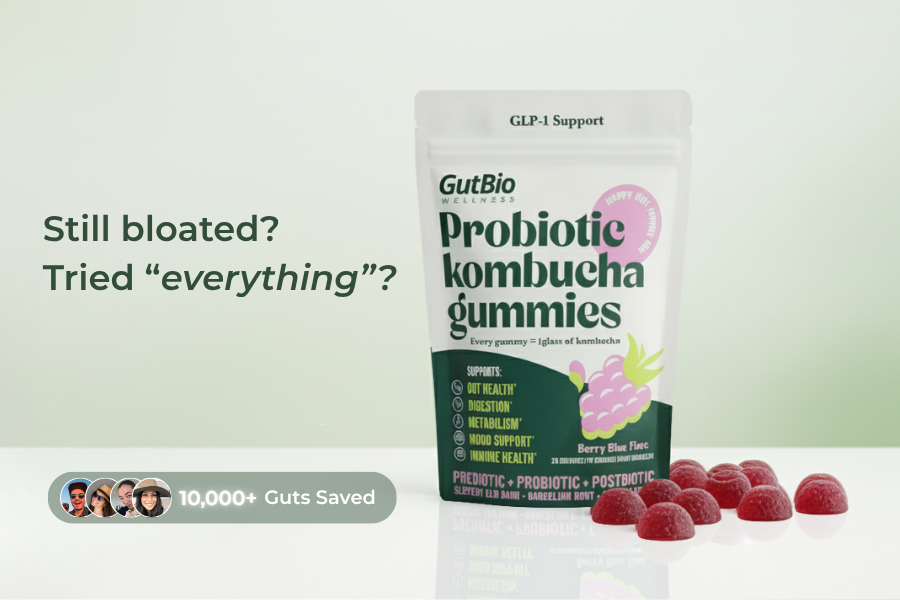
What actually works is a balanced approach that combines carefully selected probiotic strains with prebiotics and postbiotics. GutBio Kombucha Gummies deliver this triple-action formula in precisely calibrated amounts, ensuring optimal gut colonization without the overwhelming side effects of mega-dose supplements.
Myth #2: "All Probiotic Strains Do the Same Thing"
Here's a truth bomb: treating all probiotics as interchangeable is like saying all vitamins serve the same purpose. Each bacterial strain has specific functions, and many commercial supplements throw together random strains without considering their synergistic effects.
Research from the International Journal of Food Microbiology demonstrates that Lactobacillus acidophilus excels at lactose digestion, while Bifidobacterium longum specializes in immune system support. Bacillus coagulans, meanwhile, is uniquely equipped to survive stomach acid and reduce inflammatory markers associated with bloating.
The key is choosing supplements that use clinically researched strain combinations. This is where most myths about gut health supplements debunked become apparent—it's not about quantity or marketing hype, but scientific formulation based on how different strains actually work together in your digestive system.
Myth #3: "Fermented Foods Are Always Better Than Supplements"
While fermented foods like yogurt and sauerkraut certainly have their place, the myth that they're always superior to quality supplements is simply false. Most commercial fermented foods contain unpredictable bacterial counts, high sugar content, and strains that may not survive your digestive process.
A 2023 study in Applied and Environmental Microbiology found that many store-bought fermented products contain fewer viable probiotics than claimed on their labels. Additionally, traditional fermented foods often lack the prebiotics necessary to help beneficial bacteria establish themselves in your gut.
Modern supplement science has evolved to address these shortcomings. Quality formulations now combine the benefits of fermentation with targeted prebiotic fibers and postbiotic metabolites that fermented foods simply can't provide consistently.
Thousands of people have already made the switch.
Get Free Shipping Today →Myth #4: "Gut Health Supplements Work Immediately"
Instagram influencers love promoting the fantasy of overnight gut transformation, but this expectation actually sabotages your success. Your gut microbiome took years to develop its current state, and meaningful changes require consistent support over weeks, not hours.
Peer-reviewed research consistently shows that significant microbiome shifts occur between 2-8 weeks of consistent supplementation. The bacteria need time to colonize, compete with harmful microorganisms, and establish beneficial metabolic pathways that reduce bloating and improve digestion.
Understanding this timeline is crucial for success. Do Kombucha Gummies Actually Work? An Honest, No-BS Review explores realistic expectations and why patience with consistent supplementation delivers the lasting results you're seeking.
Myth #5: "Sugar in Probiotic Supplements Doesn't Matter"
This might be the most damaging myth of all. Many popular probiotic gummies contain 3-5 grams of sugar per serving, which directly feeds the harmful bacteria you're trying to eliminate. It's like trying to quit smoking while carrying a pack of cigarettes.
Research published in Cell Host & Microbe demonstrates that excess sugar consumption promotes the growth of inflammatory bacterial strains while suppressing beneficial species like Bifidobacterium and Lactobacillus. High-sugar probiotics can actually worsen bloating and digestive issues.
The solution lies in low-sugar formulations that provide the palatability you want without sabotaging your gut health goals. GutBio Kombucha Gummies contain less than 1 gram of sugar per serving, allowing you to support beneficial bacteria without feeding the harmful ones that cause bloating and discomfort.
Myth #6: "Prebiotics Are Just Marketing Hype"
Many people dismiss prebiotics as unnecessary add-ons, but this couldn't be further from the truth. Probiotics without prebiotics are like trying to plant a garden without soil—you might get temporary results, but nothing sustainable.
Clinical studies show that prebiotics increase the survival rate of beneficial bacteria by up to 1000% compared to probiotics alone. These specialized fibers serve as food for your gut microbes, helping them establish permanent colonies rather than just passing through your system.
The most effective approach combines probiotics with targeted prebiotics and postbiotics (beneficial bacterial metabolites) for comprehensive gut ecosystem support. Complete Beginner's Guide to Probiotics explains exactly how these three components work together to eliminate bloating and restore digestive balance.
Myth #7: "Natural Always Means Safe and Effective"
The final myth that keeps people trapped in digestive discomfort is the assumption that "natural" products are automatically safe and effective. While natural ingredients can be powerful, they require proper processing, standardization, and quality control to deliver consistent results.
Many natural gut health supplements contain unstandardized extracts with unpredictable potency, potential contaminants, or interactions with medications. The FDA doesn't regulate supplements the same way as pharmaceuticals, making third-party testing and transparent sourcing absolutely critical.
When myths about gut health supplements debunked by science guide your choices instead of marketing claims, you'll seek products that combine natural ingredients with rigorous quality standards, proper dosing, and clinical validation.
What Actually Works: The Science-Based Approach
Now that we've shattered these common misconceptions, let's focus on what actually delivers results. Effective gut health support requires:
- Clinically researched bacterial strains in therapeutic doses
- Prebiotic fibers to feed beneficial bacteria
- Postbiotic metabolites for immediate gut lining support
- Minimal sugar content to avoid feeding harmful bacteria
- Third-party testing for purity and potency
- Consistent daily use for 4-8 weeks minimum
GutBio Kombucha Gummies represent the culmination of this research-based approach. Each gummy delivers a precise blend of pre, pro, and postbiotics in a low-sugar formula designed to fix bloating in 30 days. Unlike products that rely on myths and marketing, our formulation is based on peer-reviewed science and real-world results.
Frequently Asked Questions
How long does it take to see results from gut health supplements?
Most people notice initial improvements in bloating and digestive comfort within 7-14 days, with significant microbiome changes occurring between 4-8 weeks of consistent use. The key is daily consistency rather than sporadic supplementation.
Can I take gut health supplements with other medications?
While probiotics are generally safe, it's always best to consult with your healthcare provider before starting any new supplement, especially if you're taking antibiotics, immunosuppressive drugs, or have underlying health conditions.
Why do some probiotic supplements cause bloating initially?
Temporary bloating during the first few days is normal as your gut microbiome adjusts to new bacterial strains. This usually subsides within a week. However, persistent bloating may indicate the supplement contains too many CFUs or unsuitable strains for your system.