

Prebiotics vs Probiotics vs Postbiotics: What's the Difference and Which Do You Need?
Your gut health impacts everything from your immune system to your mood, yet most people only know about probiotics. The truth is, optimal digestive wellness requires understanding three key players: prebiotics, probiotics, and postbiotics. If you've been wondering what are postbiotics and why do you need them, you're not alone. This comprehensive guide breaks down each component and reveals why getting all three together creates the most powerful approach to gut health.
What Are Probiotics?
Probiotics are live beneficial bacteria that colonize your digestive tract. These microscopic allies help maintain the delicate balance of your gut microbiome, which contains trillions of bacteria that influence your overall health.
Research shows that probiotics support:
- Digestive function and regularity
- Immune system strength (70% of immune cells live in your gut)
- Nutrient absorption
- Mental health through the gut-brain axis
- Inflammation reduction
Common probiotic strains include Lactobacillus acidophilus, Bifidobacterium bifidum, and Saccharomyces boulardii. Each strain offers unique benefits, which is why diversity matters when choosing a probiotic supplement.
However, probiotics face a significant challenge: survival. Many probiotic bacteria die during manufacturing, storage, or when exposed to stomach acid. This is where understanding the full picture of gut health becomes crucial.
What Are Prebiotics?
Think of prebiotics as fertilizer for your gut garden. These non-digestible fibers serve as food for beneficial bacteria, helping them thrive and multiply in your digestive system.
Prebiotics work by:
- Feeding existing beneficial bacteria in your gut
- Promoting the growth of specific probiotic strains
- Creating an environment where good bacteria outcompete harmful ones
- Supporting the production of short-chain fatty acids
The most researched prebiotic fibers include inulin, fructooligosaccharides (FOS), and galactooligosaccharides (GOS). These compounds naturally occur in foods like garlic, onions, bananas, and asparagus, but most people don't consume enough through diet alone.
What makes prebiotics particularly valuable is their stability. Unlike probiotics, prebiotic fibers easily survive stomach acid and reach your colon where they're needed most. They essentially ensure that both supplemented and native beneficial bacteria have the fuel they need to flourish.
What Are Postbiotics and Why Do You Need Them?
Now we come to the most misunderstood component: postbiotics. What are postbiotics and why do you need them? Simply put, postbiotics are the beneficial compounds produced when probiotics digest prebiotics. Think of them as the "end products" of healthy bacterial metabolism.
Postbiotics include:
- Short-chain fatty acids (SCFAs) like butyrate, acetate, and propionate
- Beneficial enzymes
- Peptides and amino acids
- Vitamins (especially B vitamins and vitamin K)
- Antimicrobial compounds
Here's why postbiotics deserve attention: they provide immediate benefits without requiring bacterial colonization. While probiotics need time to establish themselves and prebiotics need time to be fermented, postbiotics go to work right away.
Research reveals that postbiotics:
- Strengthen the gut barrier, reducing leaky gut syndrome
- Modulate immune responses more effectively than probiotics alone
- Provide anti-inflammatory effects throughout the body
- Support healthy cholesterol levels
- Improve insulin sensitivity
- Enhance mineral absorption
The stability advantage of postbiotics cannot be overstated. Unlike live probiotics, postbiotics don't require refrigeration or special handling, and they maintain their potency throughout product shelf life.
Prebiotics vs Probiotics vs Postbiotics: Key Differences
Understanding the distinctions helps you make informed decisions about your gut health strategy:
Probiotics:
- Living organisms that require specific conditions to survive
- Work by colonizing your gut
- Benefits depend on successful bacterial establishment
- Can be sensitive to heat, moisture, and stomach acid
- Effects may take weeks to notice
Prebiotics:
- Non-living fibers that feed beneficial bacteria
- Stable and survive digestion easily
- Support both supplemented and existing gut bacteria
- Benefits emerge as bacteria ferment the fibers
- Can cause initial bloating in sensitive individuals
Postbiotics:
- Metabolic byproducts of bacterial fermentation
- Provide immediate benefits upon consumption
- Extremely stable and shelf-stable
- Work independently of bacterial colonization
- Generally well-tolerated with minimal side effects
Why Getting All Three Together Matters Most
Here's the breakthrough insight: prebiotics, probiotics, and postbiotics work synergistically. Each component addresses different aspects of gut health, and combining them creates what researchers call a "synbiotic" effect—where the whole becomes greater than the sum of its parts.
The synergistic benefits include:
- Immediate and long-term support: Postbiotics provide instant benefits while prebiotics feed probiotics for sustained improvement
- Enhanced survival: Prebiotics help probiotics establish better, increasing their survival rates
- Comprehensive coverage: Different mechanisms address various gut health challenges simultaneously
- Reduced side effects: Postbiotics can minimize the initial digestive upset some experience with probiotics alone
This is exactly why we developed GutBio Kombucha Gummies—the only low-sugar gummy that combines all three components in one convenient, delicious supplement.
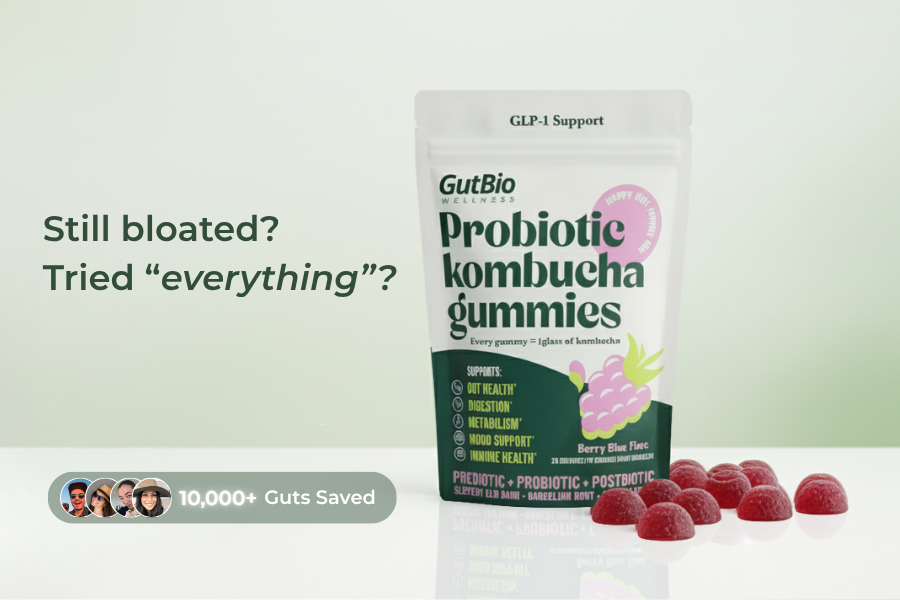
Our unique formulation delivers:
- Live probiotic strains for bacterial diversity
- Prebiotic fibers to feed and sustain beneficial bacteria
- Postbiotic compounds for immediate gut barrier support
- All in a delicious, low-sugar gummy format that's easy to take daily
Rather than taking multiple supplements or hoping that probiotics alone will solve your digestive issues, GutBio Kombucha Gummies provide the complete gut health solution your digestive system needs to fix bloating in 30 days.
Shop GutBio Kombucha Gummies and experience the difference that comprehensive gut support makes.
Frequently Asked Questions
Q: Can I get prebiotics, probiotics, and postbiotics from food alone?
A: While fermented foods like kombucha, kefir, and sauerkraut provide some of each component, getting therapeutic amounts requires intentional supplementation. Most people don't consume enough prebiotic-rich foods, and food sources of postbiotics are limited.
Q: How long does it take to see results from combining prebiotics, probiotics, and postbiotics?
A: Postbiotics begin working immediately, but you'll typically notice improvements in bloating and digestion within 1-2 weeks. Significant changes in overall gut health usually occur within 30 days of consistent use.
Q: Are there any side effects to taking all three together?
A: The combination is generally well-tolerated. Some people may experience mild bloating during the first few days as their gut bacteria adjust, but this typically resolves quickly. Starting with the recommended dose helps minimize any adjustment period.