

Prebiotics vs Probiotics vs Postbiotics: What's the Difference and Which Do You Need?
If you've been exploring gut health supplements, you've likely encountered terms like prebiotics, probiotics, and the newer buzzword: postbiotics. While these three sound similar, they each play distinct and complementary roles in supporting your digestive system. Understanding what are postbiotics and why you need them, along with how they work with prebiotics and probiotics, can help you make informed decisions about your gut health strategy.
Your gut microbiome is a complex ecosystem containing trillions of bacteria that influence everything from digestion to immune function and even mood. To optimize this system, you need to understand how these three "biotics" work together to create a thriving intestinal environment.
What Are Prebiotics?
Prebiotics are non-digestible fiber compounds that serve as food for the beneficial bacteria already living in your gut. Think of them as fertilizer for your microbiome garden. These specialized plant fibers pass through your small intestine undigested and reach your colon, where they become a feast for your good bacteria.
Common types of prebiotics include:
- Inulin (found in chicory root, garlic, and onions)
- Fructooligosaccharides (FOS)
- Galactooligosaccharides (GOS)
- Resistant starch
When your beneficial bacteria consume prebiotics, they multiply and become more active, creating a stronger foundation for overall gut health. This process also produces beneficial compounds called short-chain fatty acids, which support intestinal barrier function and reduce inflammation.
The key benefit of prebiotics is that they're selective - they preferentially feed the good bacteria while leaving harmful bacteria without their preferred food sources. This helps shift the balance of your microbiome toward a healthier composition.
What Are Probiotics?
Probiotics are live beneficial bacteria and yeasts that you introduce to your digestive system through supplements or fermented foods. These microscopic allies can help restore balance to your gut microbiome, especially after disruptions from antibiotics, stress, poor diet, or illness.
The most researched probiotic strains include:
- Lactobacillus acidophilus
- Bifidobacterium bifidum
- Lactobacillus casei
- Saccharomyces boulardii (a beneficial yeast)
Probiotics work by colonizing your intestinal tract, competing with harmful bacteria for space and resources, producing antimicrobial substances, and supporting your immune system. However, many probiotic bacteria are transient, meaning they don't permanently establish themselves in your gut but provide benefits while passing through.
Research shows that probiotics can help with digestive issues like bloating, irregular bowel movements, and intestinal inflammation. They may also support immune function since approximately 70% of your immune system is located in your gut.
What Are Postbiotics and Why You Need Them
Now we come to the most intriguing piece of the puzzle: what are postbiotics and why do you need them. Postbiotics are the beneficial compounds produced when probiotics consume prebiotics. These bioactive metabolites include short-chain fatty acids, enzymes, peptides, vitamins, and other beneficial substances that directly support your health.
Key postbiotic compounds include:
- Butyrate - supports intestinal barrier function and reduces inflammation
- Acetate - helps regulate appetite and metabolism
- Propionate - supports liver function and cholesterol metabolism
- Bacteriocins - natural antimicrobial peptides
- Vitamins (especially B vitamins and vitamin K)
Understanding what are postbiotics and why you need them reveals why they're gaining attention in the wellness community. Unlike probiotics, postbiotics don't need to survive the harsh acidic environment of your stomach or establish themselves in your gut. They're ready-to-use beneficial compounds that can immediately start supporting your health.
Postbiotics offer several advantages:
- Stability - they don't require refrigeration or special storage conditions
- Safety - no risk of overgrowth since they're not live organisms
- Immediate action - they don't need time to colonize or multiply
- Consistency - you get the same beneficial compounds every time
Research shows that postbiotics can help reduce bloating, support regular digestion, strengthen intestinal barrier function, and even support immune system balance. They represent the "end goal" of what we want our gut bacteria to produce naturally.
Why Getting All Three Matters: The Synbiotic Approach
While each type of biotic offers unique benefits, the most comprehensive approach to gut health involves getting all three working together. This combination is called a "synbiotic" approach, and it creates a self-reinforcing cycle of gut health optimization.
Here's how they work together:
- Prebiotics feed both your existing beneficial bacteria and any new probiotics you introduce
- Probiotics add beneficial bacteria to your microbiome and help crowd out harmful microorganisms
- Postbiotics provide immediate beneficial compounds while your gut bacteria work to produce more naturally
This three-pronged approach addresses gut health from multiple angles simultaneously. You're feeding your existing good bacteria, adding reinforcements, and providing the beneficial end products all at once.
Most supplements focus on just one or two of these components, but comprehensive gut health requires all three working in harmony. That's why we developed GutBio Kombucha Gummies - the only low-sugar gummy that combines prebiotics, probiotics, and postbiotics in one convenient daily supplement.
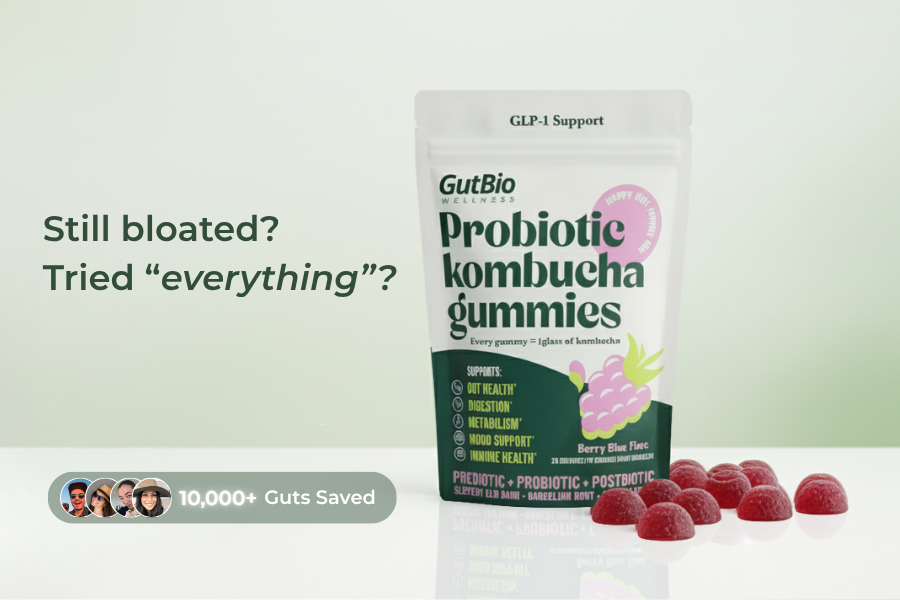
Our unique fermentation process creates a synbiotic blend that delivers:
- Prebiotic fibers to feed your beneficial bacteria
- Live probiotic cultures from our kombucha fermentation
- Postbiotic compounds produced during the fermentation process
This comprehensive approach means you're not just hoping your gut bacteria will eventually produce what you need - you're providing immediate support while building long-term digestive health. Many customers report improvements in bloating, regularity, and overall digestive comfort within the first 30 days.
The convenience factor can't be overstated either. Instead of taking multiple supplements or trying to get all three components from different food sources, you get everything in two delicious, low-sugar gummies per day.
Frequently Asked Questions
How long does it take to see results from prebiotics, probiotics, and postbiotics?
Postbiotics can provide immediate benefits since they're ready-made beneficial compounds. Probiotics typically show effects within 1-2 weeks as they establish themselves in your gut. Prebiotics work more gradually over 2-4 weeks as they feed and strengthen your existing beneficial bacteria. When combined in a synbiotic approach like our GutBio Kombucha Gummies, most people notice improvements in bloating and digestive comfort within 30 days.
Can you take prebiotics, probiotics, and postbiotics together safely?
Yes, taking all three together is not only safe but beneficial. This combination is called a synbiotic approach and is considered the gold standard for comprehensive gut health support. The three components work together synergistically - prebiotics feed the probiotics, and both contribute to postbiotic production. Our GutBio Kombucha Gummies are specifically formulated to provide all three in optimal ratios.
What's the difference between postbiotics and the compounds my gut bacteria make naturally?
Postbiotics in supplements are the same beneficial compounds your gut bacteria produce naturally, including short-chain fatty acids, enzymes, and vitamins. The advantage of supplemental postbiotics is that they provide these benefits immediately without waiting for your gut bacteria to produce them. This is especially helpful if your microbiome is imbalanced or depleted, ensuring you get consistent beneficial compounds while your gut ecosystem rebuilds itself.