

Prebiotics vs Probiotics vs Postbiotics: What's the Difference and Which Do You Need?
When it comes to gut health, you've likely heard about probiotics and maybe even prebiotics. But there's a third player in the gut health game that's gaining serious attention from researchers and health experts: postbiotics. Understanding what are postbiotics and why you need them is crucial for anyone looking to optimize their digestive health and overall wellness.
The world of gut health can feel overwhelming with all the "biotics" terminology flying around. Each of these three components plays a unique and important role in maintaining a healthy digestive system, but they work in completely different ways. Let's break down exactly what each one does and why having all three working together might be the key to finally fixing your digestive issues.
What Are Probiotics?
Probiotics are live beneficial bacteria and yeasts that provide health benefits when consumed in adequate amounts. Think of them as the "good guys" that you're adding to your gut microbiome to help crowd out harmful bacteria and support digestive function.
These living microorganisms work by:
- Colonizing your intestinal tract with beneficial bacteria
- Competing with harmful bacteria for resources and space
- Supporting immune system function
- Helping break down food and absorb nutrients
- Producing beneficial compounds as they metabolize
Common probiotic strains include Lactobacillus acidophilus, Bifidobacterium longum, and Saccharomyces boulardii. You can find probiotics in fermented foods like yogurt, kefir, sauerkraut, and kimchi, as well as in supplement form.
However, probiotics face some challenges. They need to survive the acidic environment of your stomach to reach your intestines alive, and they need the right conditions to thrive once they get there. This is where prebiotics come into play.
What Are Prebiotics?
Prebiotics are non-digestible fibers and compounds that serve as food for the beneficial bacteria already living in your gut. If probiotics are the "good guys," then prebiotics are the fuel that keeps them happy, healthy, and multiplying.
Prebiotics work by:
- Feeding existing beneficial bacteria in your gut
- Promoting the growth and activity of good bacteria
- Helping beneficial bacteria outcompete harmful ones
- Supporting the production of short-chain fatty acids
- Improving the overall environment of your gut microbiome
Common prebiotic fibers include inulin, fructooligosaccharides (FOS), galactooligosaccharides (GOS), and resistant starch. You can find these naturally in foods like garlic, onions, asparagus, bananas, oats, and flaxseeds.
The beauty of prebiotics is that they're more stable than probiotics - they don't need to be kept alive, and they can survive stomach acid without any problems. But even with probiotics and prebiotics working together, there's still a missing piece to the puzzle.
What Are Postbiotics and Why Do You Need Them?
Now we get to the most exciting and often overlooked component: postbiotics. Understanding what are postbiotics and why you need them is essential for anyone serious about gut health, yet they're often completely ignored in digestive wellness discussions.
Postbiotics are the beneficial compounds produced when probiotics ferment prebiotic fibers. These include short-chain fatty acids, peptides, enzymes, vitamins, and other metabolites that provide direct health benefits to your body.
What makes postbiotics so special is that they offer immediate benefits without requiring any bacterial colonization or fermentation process. When you consume postbiotics, you're getting the end products of a healthy gut microbiome without having to wait for the process to occur naturally.
Key postbiotic compounds include:
- Butyrate: A short-chain fatty acid that feeds intestinal cells and reduces inflammation
- Acetate: Supports metabolic health and helps regulate appetite
- Propionate: May help lower cholesterol and support liver health
- Lactate: Helps maintain an acidic gut environment that inhibits harmful bacteria
- Beneficial enzymes: Aid in digestion and nutrient absorption
- Vitamins and minerals: Including B vitamins and vitamin K2
The advantages of postbiotics are significant. Unlike probiotics, they don't need to be alive, so they're more stable and have a longer shelf life. They also provide immediate benefits rather than requiring time to establish themselves in your gut. This is why understanding what are postbiotics and why you need them is so important for optimal digestive health.
Why Getting All Three Matters
Here's where the magic happens: while each of these components offers benefits on their own, they work synergistically to create optimal gut health. This is called the "synbiotic effect," and it's why getting all three together can be far more effective than taking any single component alone.
The synergistic benefits include:
- Immediate and long-term support: Postbiotics provide immediate benefits while probiotics and prebiotics work to improve your gut health over time
- Enhanced probiotic survival: Prebiotics help probiotics thrive, while postbiotics create an environment that supports beneficial bacteria
- Comprehensive gut support: You're addressing gut health from multiple angles simultaneously
- Better digestive outcomes: Users often report faster and more noticeable improvements in bloating, regularity, and overall digestive comfort
The challenge has always been finding a convenient way to get all three in the right ratios. Most supplements focus on just probiotics, some include prebiotics, but very few include the crucial postbiotic component.
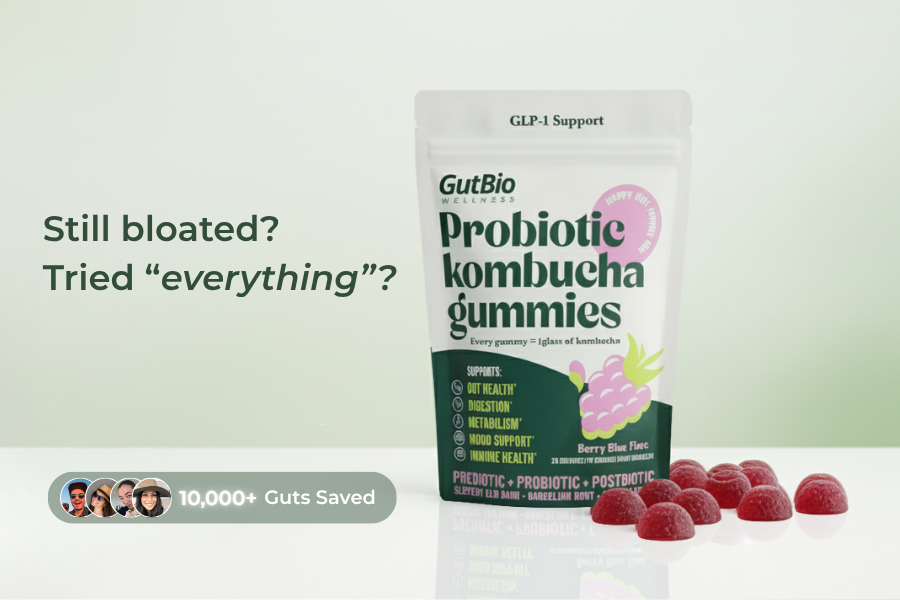
That's exactly why GutBio Kombucha Gummies were formulated to be the only low-sugar gummy that combines all three: prebiotics, probiotics, and postbiotics in one delicious, convenient form. Each gummy delivers this complete trinity of gut health support, helping you fix bloating in 30 days while supporting your overall digestive wellness.
What makes this combination particularly effective is that the postbiotics provide immediate benefits while the prebiotics feed both the included probiotics and your existing beneficial bacteria. Meanwhile, the probiotics add to your gut's beneficial bacterial population. It's like having a complete gut health ecosystem in every gummy.
Frequently Asked Questions
Can I get prebiotics, probiotics, and postbiotics from food alone?
While you can get these compounds from various foods, it's challenging to get therapeutic amounts of all three consistently. Fermented foods provide probiotics and some postbiotics, while fiber-rich foods offer prebiotics. However, getting the right balance and concentration for optimal gut health benefits typically requires supplementation, especially for postbiotics which are found in much smaller amounts in food.
How long does it take to see results from taking prebiotics, probiotics, and postbiotics together?
Many people notice improvements in digestive comfort within the first week, with more significant changes in bloating and regularity occurring within 2-4 weeks. The postbiotics provide immediate benefits, while the prebiotics and probiotics work over time to improve your gut microbiome. For optimal results, consistency is key - taking them daily for at least 30 days allows for the full synergistic effect to take place.
Are there any side effects to taking all three biotics together?
Most people tolerate the combination very well, especially when taken as directed. Some individuals may experience mild digestive changes like temporary gas or bloating during the first few days as their gut microbiome adjusts, but this typically resolves quickly. Starting with the recommended dose and taking with food can minimize any temporary adjustment period. If you have serious digestive conditions or take medications, consult with your healthcare provider before starting any new supplement regimen.