

Can Probiotics Actually Help You Lose Weight? Here's What the Research Says
If you've been scrolling through health forums or social media lately, you've probably seen claims about probiotics being the secret to effortless weight loss. But can probiotics help with weight loss and bloating in the way these bold headlines suggest? The answer is more nuanced than you might expect.
As someone who's likely frustrated with conflicting information about gut health and weight management, you deserve an honest, science-backed look at what probiotics can and cannot do for your body. Let's dive into the research and separate fact from fiction.
The Gut-Weight Connection: What Science Actually Shows
Your gut microbiome—the trillions of bacteria living in your digestive system—plays a fascinating role in how your body processes food, stores fat, and regulates hunger hormones. Research has revealed some compelling connections between gut bacteria and weight management.
Studies have found that people with obesity tend to have less diverse gut bacteria compared to those at healthy weights. Specifically, research published in the journal Nature showed that lean individuals typically have higher levels of beneficial bacteria like Bifidobacterium and Lactobacillus.
But here's where it gets interesting: when researchers transplanted gut bacteria from lean mice into obese mice, the obese mice lost weight. This suggests that can probiotics help with weight loss and bloating isn't just wishful thinking—there's a real biological mechanism at work.
How Gut Bacteria Affects Your Metabolism
Your gut bacteria influence your weight through several key mechanisms:
1. Short-Chain Fatty Acid Production
Beneficial bacteria ferment fiber in your gut, producing short-chain fatty acids (SCFAs) like butyrate. These compounds help regulate metabolism, reduce inflammation, and may increase fat burning. However, you need the right bacteria and adequate fiber intake for this process to work effectively.
2. Hormone Regulation
Your gut bacteria communicate with hormones that control hunger and satiety, including GLP-1 and leptin. An imbalanced microbiome can disrupt these signals, potentially leading to increased appetite and slower metabolism.
3. Inflammation Control
Chronic low-grade inflammation, often called "inflammaging," can interfere with weight management. Certain probiotic strains help reduce inflammatory markers, which may support healthier metabolic function.
Bloating vs. Fat Loss: Understanding the Difference
Here's where we need to be completely honest: much of the initial "weight loss" people experience with probiotics isn't actually fat loss—it's reduced bloating and water retention.
When your gut bacteria are imbalanced, harmful bacteria can ferment food in ways that produce excess gas, leading to uncomfortable bloating and distension. This can make you look and feel heavier than you actually are.
Probiotics can help restore balance, reducing gas production and inflammation in the gut lining. The result? You may notice your clothes fit better and feel less "puffy"—but the number on the scale might not change dramatically right away.
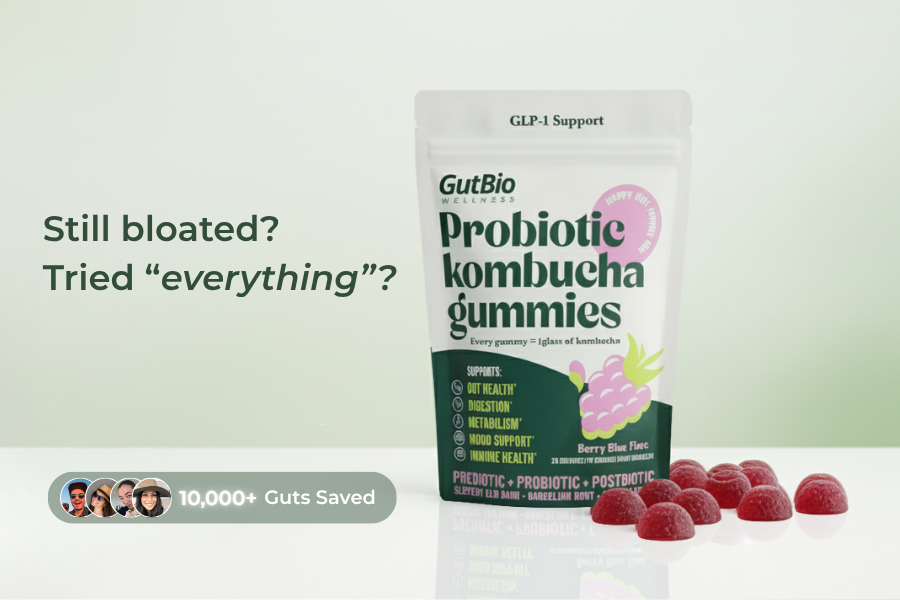
This is exactly why our GutBio Kombucha Gummies focus on fixing bloating first. These gummies combine pre, pro, and postbiotics in a low-sugar formula designed to address digestive discomfort within 30 days.
What the Research Says About Probiotic Weight Loss
Let's look at what clinical studies actually show about whether can probiotics help with weight loss and bloating:
A 2019 meta-analysis published in Nutrients reviewed 15 randomized controlled trials involving over 950 participants. The results showed modest weight loss—an average of 1.3 pounds over 8-12 weeks when taking specific probiotic strains.
Another study focusing on Lactobacillus gasseri found that participants lost an average of 2.6 pounds and reduced abdominal fat by 1.4% over 12 weeks. While statistically significant, these results highlight the importance of realistic expectations.
More promising were the studies on digestive symptoms: participants consistently reported significant improvements in bloating, gas, and overall digestive comfort within 2-4 weeks of starting probiotics.
Setting Realistic Expectations
If you're hoping probiotics will melt away 20 pounds in a month, you'll be disappointed. Here's what you can realistically expect:
What Probiotics CAN Do:
- Reduce bloating and digestive discomfort
- Support healthy digestion and regularity
- Help maintain a balanced gut microbiome
- Potentially support modest weight management as part of a healthy lifestyle
- Improve energy levels by optimizing nutrient absorption
What Probiotics CANNOT Do:
- Replace a balanced diet and regular exercise
- Cause rapid, dramatic weight loss
- Work the same way for everyone
- Fix underlying metabolic conditions on their own
The Role of Prebiotics and Postbiotics
While probiotics get most of the attention, the most effective approach to gut health includes prebiotics (food for beneficial bacteria) and postbiotics (beneficial compounds produced by probiotics).
This is why we formulated our GutBio Kombucha Gummies with all three components. The prebiotics feed your existing good bacteria, the probiotics add beneficial strains, and the postbiotics provide immediate benefits while your gut rebalances.
Research suggests this comprehensive approach may be more effective than probiotics alone for both digestive health and supporting healthy weight management.
Who Might Benefit Most from Probiotics?
Not everyone will experience the same benefits from probiotics. You might be a good candidate if you:
- Experience frequent bloating, especially after meals
- Have taken antibiotics recently
- Deal with irregular digestion
- Feel like you're doing "everything right" with diet and exercise but still struggle with weight
- Have high stress levels (which can disrupt gut bacteria)
The question of can probiotics help with weight loss and bloating often comes down to your individual gut microbiome and overall health status.
Making Probiotics Work for You
If you decide to try probiotics, here are evidence-based tips to maximize their effectiveness:
1. Choose Quality Products
Look for probiotics that include multiple strains, have been properly stored, and contain prebiotics. Our GutBio Kombucha Gummies meet all these criteria while being convenient and great-tasting.
2. Be Consistent
Benefits typically appear after 2-4 weeks of consistent use. Don't expect overnight results.
3. Support with Fiber
Eat plenty of fiber-rich foods like vegetables, fruits, and whole grains to feed your beneficial bacteria.
4. Manage Stress
Chronic stress can disrupt gut bacteria. Practice stress management techniques alongside probiotic supplementation.
5. Stay Hydrated
Proper hydration supports healthy digestion and helps probiotics work more effectively.
The Bottom Line
So, can probiotics help with weight loss and bloating? The honest answer is: yes, but with important caveats.
Probiotics can definitely help reduce bloating and support digestive health, which may make you feel and look less puffy. They may also provide modest support for weight management when combined with a healthy diet and regular exercise.
However, they're not a magic weight loss solution. The most dramatic and immediate benefits you're likely to notice are improved digestion, reduced bloating, and better overall gut comfort.
If you're dealing with persistent bloating and want to support your gut health while maintaining realistic expectations about weight management, probiotics—especially comprehensive formulations like our GutBio Kombucha Gummies—can be a valuable addition to your wellness routine.
Frequently Asked Questions
How long does it take to see weight loss results from probiotics?
Most studies show modest weight loss effects after 8-12 weeks of consistent probiotic use. However, you may notice reduced bloating and improved digestion within 2-4 weeks, which can make you feel lighter and less puffy before any actual weight loss occurs.
Can I take probiotics if I'm already on a diet and exercise program?
Absolutely! Probiotics can complement a healthy diet and exercise routine by supporting better digestion, reducing bloating, and potentially optimizing your body's ability to process nutrients. They work best as part of an overall healthy lifestyle rather than as a standalone solution.
Are there any side effects to taking probiotics for weight management?
Most people tolerate probiotics well, but some may experience mild digestive changes like gas or bloating during the first few days as their gut bacteria adjust. These symptoms typically resolve within a week. If you have serious digestive conditions or are immunocompromised, consult your healthcare provider before starting any probiotic regimen.