

Prebiotics vs Probiotics vs Postbiotics: What's the Difference and Which Do You Need?
Your gut health affects everything from your immune system to your mood, yet most people only know about probiotics. The truth is, there's a whole ecosystem of beneficial compounds working in your digestive system, and understanding what are postbiotics and why you need them—along with prebiotics and probiotics—can transform your wellness journey.
If you've been struggling with bloating, digestive discomfort, or low energy, you might be missing crucial pieces of the gut health puzzle. Let's dive deep into the science behind these three powerhouse compounds and discover which one you actually need.
What Are Prebiotics?
Think of prebiotics as fertilizer for your gut garden. These specialized plant fibers can't be digested by your body, but they serve a crucial purpose: feeding the beneficial bacteria in your intestines.
Prebiotics are naturally found in foods like garlic, onions, bananas, and asparagus. When you consume them, they travel through your small intestine undigested and reach your colon, where they become food for your good bacteria.
The most common types of prebiotics include:
- Inulin - found in chicory root and Jerusalem artichokes
- Fructooligosaccharides (FOS) - present in many fruits and vegetables
- Galactooligosaccharides (GOS) - naturally occurring in legumes
Research shows that prebiotics can help increase beneficial bacteria populations, improve mineral absorption, and support immune function. However, some people experience gas and bloating when first introducing prebiotics, as their gut bacteria adjust to the increased fiber intake.
Understanding Probiotics: The Living Bacteria
Probiotics are live microorganisms—primarily bacteria and some yeasts—that provide health benefits when consumed in adequate amounts. These "good bacteria" help maintain the delicate balance of your gut microbiome.
The most well-researched probiotic strains include:
- Lactobacillus acidophilus - supports digestive health and nutrient absorption
- Bifidobacterium bifidum - helps maintain intestinal barrier function
- Lactobacillus casei - may support immune system function
Probiotics work by colonizing your gut temporarily, competing with harmful bacteria for space and resources. They produce beneficial compounds, support your intestinal lining, and help train your immune system.
You can find probiotics in fermented foods like yogurt, kefir, sauerkraut, and kimchi. However, many probiotic supplements struggle with a critical challenge: surviving the acidic environment of your stomach to reach the intestines where they're needed most.
What Are Postbiotics and Why Do You Need Them?
Here's where many people's gut health knowledge stops, but postbiotics might be the most important piece of the puzzle. So, what are postbiotics and why do you need them?
Postbiotics are the beneficial compounds produced when probiotics feed on prebiotics. Think of them as the "end products" of bacterial fermentation—the actual substances that deliver many of the health benefits we attribute to gut health.
Key postbiotic compounds include:
- Short-chain fatty acids (SCFAs) like butyrate, acetate, and propionate
- Bacteriocins - natural antimicrobial peptides
- Enzymes that aid digestion
- Vitamins, particularly B vitamins and vitamin K
What makes postbiotics particularly exciting is that they don't face the same survival challenges as probiotics. Since they're not living organisms, they remain stable and active regardless of stomach acid or temperature fluctuations.
Scientific research reveals that postbiotics can:
- Strengthen the intestinal barrier function
- Reduce inflammation throughout the body
- Support immune system regulation
- Improve metabolic health markers
- Help maintain healthy cholesterol levels
Understanding what are postbiotics and why you need them is crucial because these compounds deliver direct, measurable benefits without requiring colonization or fermentation in your gut.
The Key Differences: A Side-by-Side Comparison
To truly understand which approach is right for you, let's compare these three gut health powerhouses:
Prebiotics:
- Function: Feed beneficial bacteria
- Stability: Very stable
- Action: Indirect benefits through bacterial feeding
- Timeline: Effects develop over weeks to months
Probiotics:
- Function: Temporarily colonize the gut
- Stability: Fragile, sensitive to heat and acid
- Action: Direct bacterial activity plus metabolite production
- Timeline: Temporary presence, benefits vary
Postbiotics:
- Function: Deliver ready-made beneficial compounds
- Stability: Highly stable
- Action: Direct, immediate benefits
- Timeline: Fast-acting effects
When you understand what are postbiotics and why you need them compared to the other options, it becomes clear that each serves a unique role in supporting optimal gut health.
Which One Do You Actually Need?
The honest answer? You likely need all three working together.
Your gut microbiome is an incredibly complex ecosystem with over 1,000 different species of bacteria. Supporting this system requires a comprehensive approach that addresses multiple pathways simultaneously.
Consider your current situation:
If you're dealing with acute digestive issues like bloating, gas, or irregular bowel movements, postbiotics might provide the fastest relief since they deliver immediate benefits without waiting for bacterial fermentation.
If you're focused on long-term gut health maintenance, prebiotics help sustain your existing beneficial bacteria populations over time.
If you're recovering from antibiotic use or have a depleted microbiome, probiotics can help re-establish beneficial bacterial populations.
However, the most effective approach combines all three in what scientists call a "synbiotic" approach—using prebiotics, probiotics, and postbiotics together for maximum benefit.
Why Getting All Three Matters: The Synbiotic Advantage
Recent research in gut health science points to a powerful conclusion: the combination of prebiotics, probiotics, and postbiotics creates a synergistic effect that's greater than the sum of its parts.
Here's how they work together:
Immediate Support: Postbiotics provide instant beneficial compounds while probiotics begin establishing themselves in your gut.
Sustained Nourishment: Prebiotics feed both the introduced probiotics and your existing beneficial bacteria.
Continuous Production: As probiotics consume prebiotics, they generate additional postbiotics, creating a self-sustaining cycle of gut health support.
This comprehensive approach addresses the main limitation of single-ingredient supplements: they only target one aspect of gut health while leaving others unsupported.
Understanding what are postbiotics and why you need them as part of this trilogy helps explain why some people see dramatic improvements with synbiotic approaches while others struggle with isolated probiotic supplements.
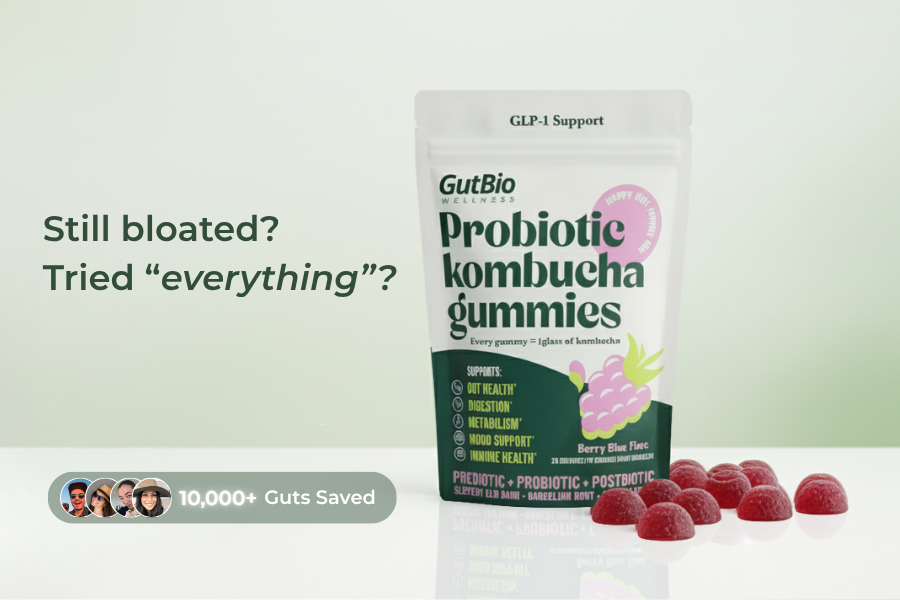
That's exactly why we developed GutBio Kombucha Gummies—the only low-sugar gummy that combines all three gut health powerhouses in one convenient daily dose.
Our unique kombucha-based formula delivers:
- Prebiotics from organic inulin to feed your beneficial bacteria
- Probiotics including Lactobacillus and Bifidobacterium strains in a protective kombucha matrix
- Postbiotics from the fermentation process, providing immediate beneficial compounds
The kombucha fermentation process creates a natural protective environment for the probiotics while generating valuable postbiotic compounds that remain stable and effective. This means you get the benefits of all three approaches without the typical stability and survival issues that plague many gut health supplements.
Plus, with only 1 gram of sugar per serving, you can support your gut health without the blood sugar spikes that can actually harm your microbiome.
Frequently Asked Questions
How long does it take to see results from prebiotics, probiotics, and postbiotics?
Postbiotics can provide benefits within days since they're ready-made beneficial compounds. Probiotics may show effects within 1-2 weeks as they establish in your gut. Prebiotics typically require 2-4 weeks to significantly increase beneficial bacteria populations. When combined in a synbiotic approach, many people notice improvements in bloating and digestive comfort within the first week.
Can you take prebiotics, probiotics, and postbiotics if you have digestive sensitivities?
Yes, but postbiotics are often the gentlest option since they don't require fermentation in your gut. Some people experience initial gas or bloating with high-dose prebiotics or when first introducing probiotics. Starting with a comprehensive formula like GutBio Kombucha Gummies allows for a gentler introduction since the amounts are balanced and the kombucha fermentation pre-processes many compounds.
What's the difference between kombucha and regular probiotic supplements?
Kombucha provides a unique advantage because it naturally contains prebiotics (from the tea), probiotics (from fermentation), and postbiotics (compounds produced during fermentation). The acidic environment of kombucha also helps protect probiotics during digestion. Regular probiotic supplements typically only contain live bacteria without the supporting prebiotics or postbiotics needed for optimal effectiveness.